September 10, 2026
September 10, 2026
A little universe, just for you
Free PNG · 1080 × 1350 · No account needed
Image rights and credit requirements apply when sharing or reusing imagery.
Your celebration date stays the same. Each image keeps its actual publication date.
Selected image source ↗ APOD published September 10, 2026. Credit: Alessandro Merga Text: Cecilia Chirenti (NASA GSFC, UMCP, CRESST II). A publication-date match, not a photo taken on your date. Independent of NASA.
Read the original APOD for the astronomer’s explanation and full image credits. Its text is preserved in the archive as published.
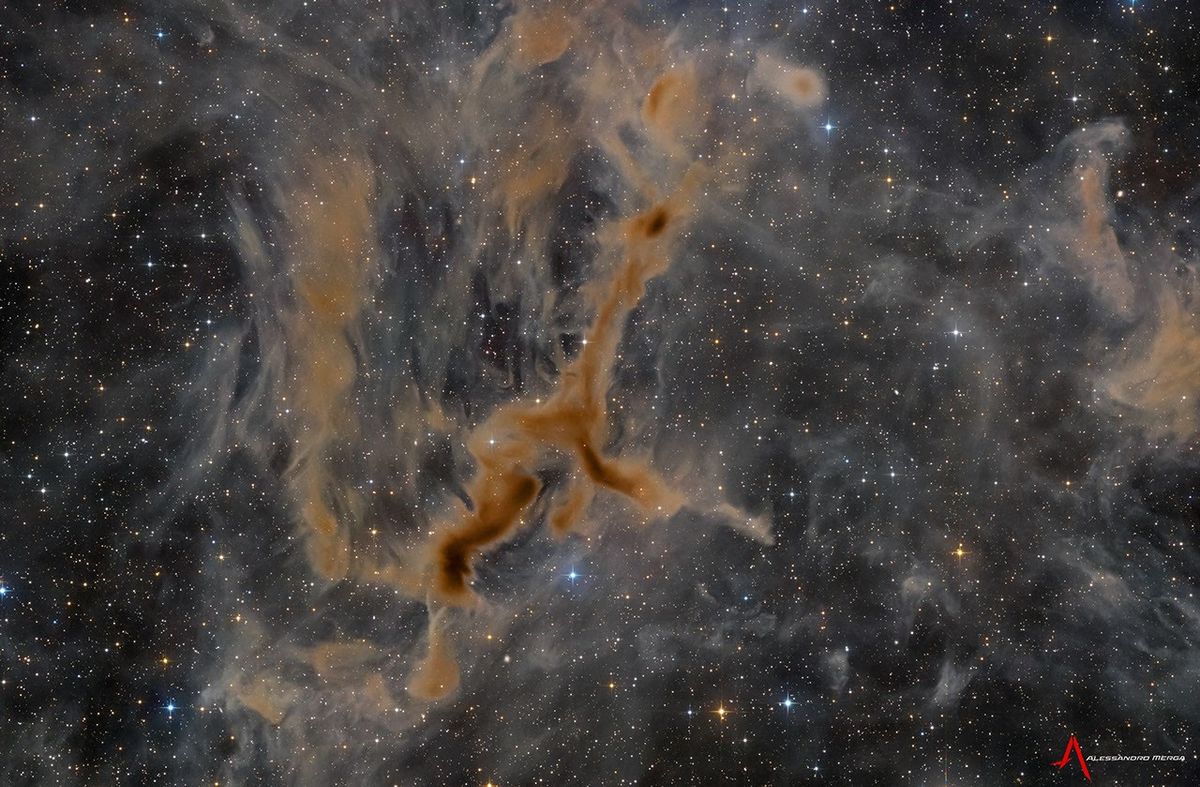
What does this image look like to you? Many see a giraffe facing right, with neck stretched high and long legs mid-stride (but some may see a squirrel instead). The featured image shows LDN 1295, also called the Giraffe Nebula, in the constellation of the mythical queen of Aethiopia (Cassiopeia). It is an object in the Lynds Catalogue of Dark Nebulas, compiled in 1962 by American astronomer Beverly Lynds, a pioneer for women in astronomy and astrophysics. Dark nebulas are interstellar clouds of dust and gas that block the visible light of the stars behind them. These nebulas are often faint and challenging targets for astrophotographers. Why do we see animal shapes and faces in nebulas, clouds, and pretty much everywhere? It is due to pareidolia, our tendency to look for familiar patterns. Pareidolia may provide animals with an evolutionary advantage, for example in identifying (and avoiding) predators. APOD's main NASA site is moving : From apod.nasa.gov to science.nasa.gov/apod
Image credit: Alessandro Merga Text: Cecilia Chirenti (NASA GSFC, UMCP, CRESST II)
Updated · APOD entries through