October 24, 2025
October 24, 2025
A little universe, just for you
Free PNG · 1080 × 1350 · No account needed
Image rights and credit requirements apply when sharing or reusing imagery.
Your celebration date stays the same. Each image keeps its actual publication date.
Selected image source ↗ APOD published October 24, 2025. Full image credits are on the original APOD entry below. A publication-date match, not a photo taken on your date. Independent of NASA.
Read the original APOD for the astronomer’s explanation and full image credits. Its text is preserved in the archive as published.
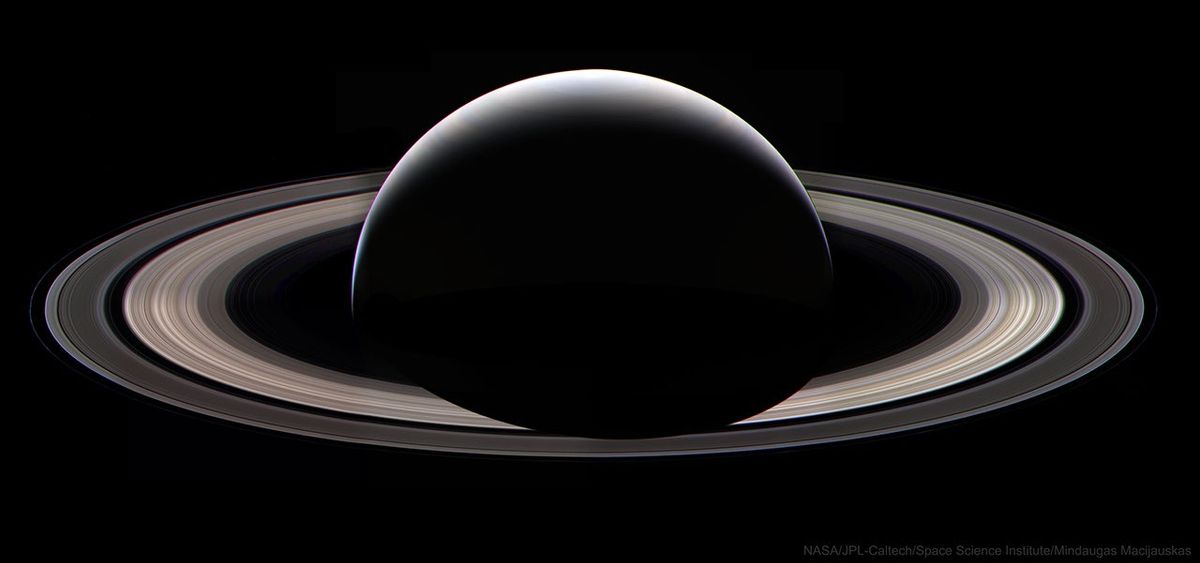
Saturn is bright in Earth's night skies. Telescopic views of the outer gas giant planet and its beautiful rings often make it a star at star parties. But this stunning view of Saturn's rings and night side just isn't possible from telescopes in the vicinity of planet Earth. Peering out from the inner Solar System they can only bring Saturn's day side into view. In fact, this image of Saturn's slender sunlit crescent with night's shadow cast across its broad and complex ring system was captured by the Cassini spacecraft. A robot spacecraft from planet Earth, Cassini called Saturn orbit home for 13 years before it was directed to dive into the atmosphere of the gas giant on September 15, 2017. This magnificent mosaic is composed of frames recorded by Cassini's wide-angle camera only two days before its grand final plunge. Saturn's night will not be seen again until another spaceship from Earth calls.
Updated · APOD entries through