November 4, 2025
November 4, 2025
A little universe, just for you
Free PNG · 1080 × 1350 · No account needed
Image rights and credit requirements apply when sharing or reusing imagery.
Your celebration date stays the same. Each image keeps its actual publication date.
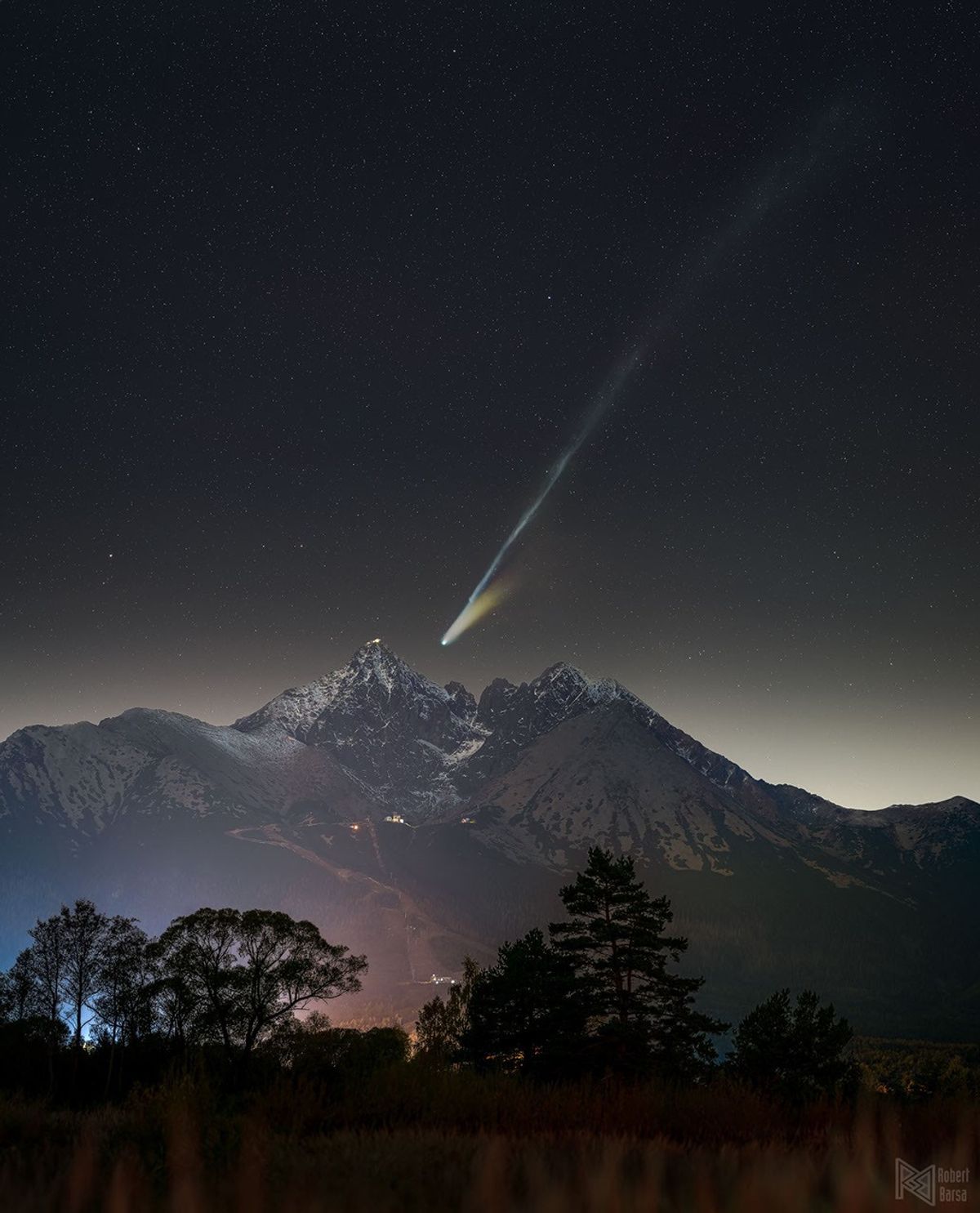
Selected image source ↗ APOD published November 4, 2025. Credit: Robert Barsa. A publication-date match, not a photo taken on your date. Independent of NASA.
Read the original APOD for the astronomer’s explanation and full image credits. Its text is preserved in the archive as published.
Comet Lemmon has been putting on a show for cameras around the globe. Passing nearest to Earth in late October, the photogenic comet C/2025 A6 (Lemmon) sprouted two long and picturesque tails: a blue ion tail and a white dust tail. The ion tail is pushed away from the coma by the ever-present but ever-changing solar wind, at one point extending over 20 times the diameter of the full Moon -- as captured in this long-duration exposure. The shorter and wider dust tail is pushed away from the coma and shines by reflecting sunlight. The featured picture, captured two weeks ago, framed the comet behind Lomnický Peak of the High Tatra Mountains, home to the Slovakian Lomnický Stit Observatory. Comet Lemmon is now fading as it heads away from planet Earth. The huge shedding snowball will round the Sun later this week.
Image credit: Robert Barsa
Updated · APOD entries through