November 30, 2025
November 30, 2025
A little universe, just for you
Free PNG · 1080 × 1350 · No account needed
Image rights and credit requirements apply when sharing or reusing imagery.
Your celebration date stays the same. Each image keeps its actual publication date.
Selected image source ↗ APOD published November 30, 2025. Full image credits are on the original APOD entry below. A publication-date match, not a photo taken on your date. Independent of NASA.
Read the original APOD for the astronomer’s explanation and full image credits. Its text is preserved in the archive as published.
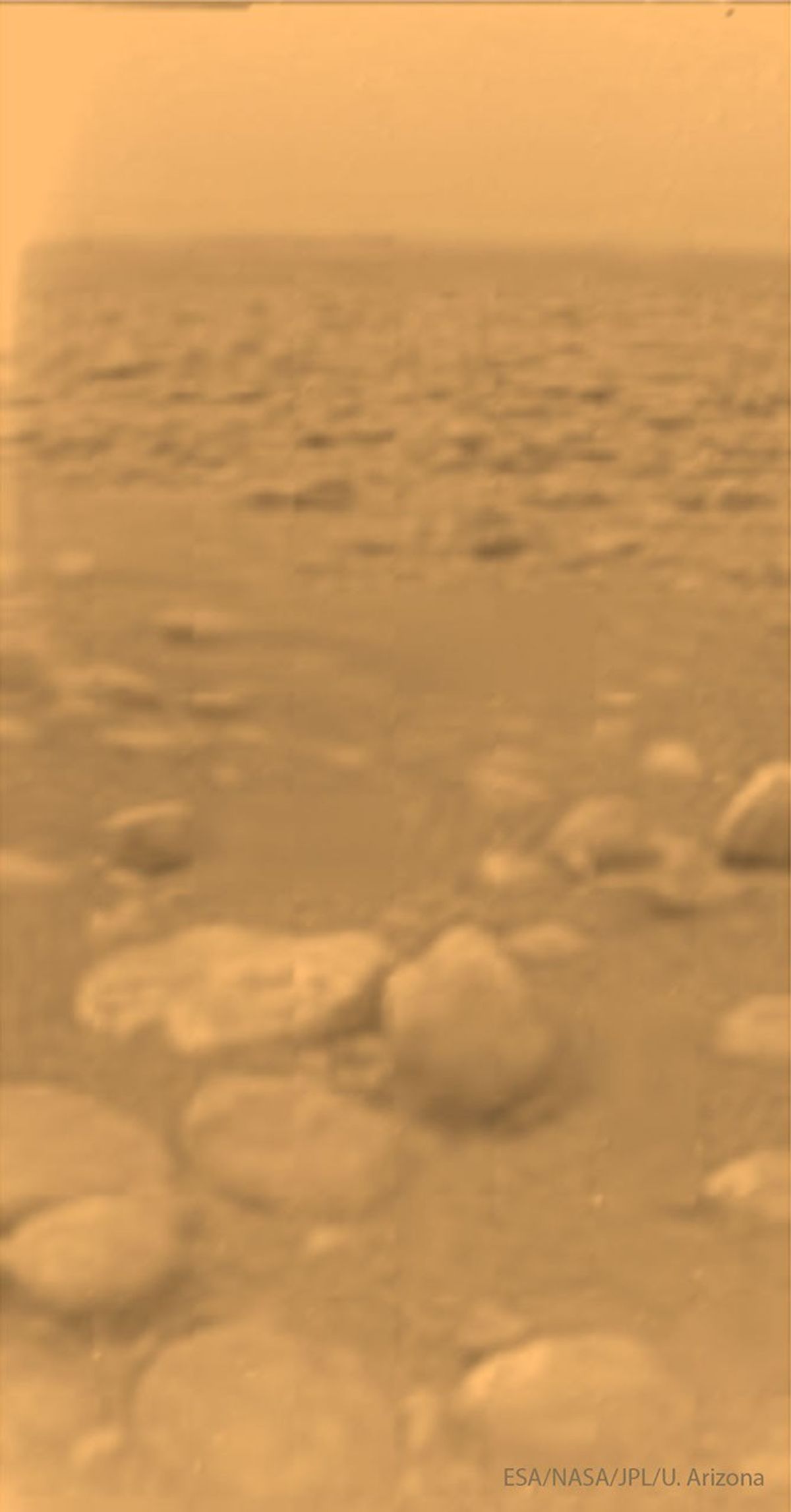
If you could stand on Titan -- what would you see? The featured color view from Titan gazes across an unfamiliar and distant landscape on Saturn's largest moon. The scene was recorded by ESA's Huygens probe in 2005 after a 2.5-hour descent through a thick atmosphere of nitrogen laced with methane. Bathed in an eerie orange light at ground level, rocks strewn about the scene could well be composed of water and hydrocarbons frozen solid at an inhospitable temperature of negative 179 degrees C. The large light-toned rock below and left of center is only about 15 centimeters across and lies 85 centimeters away. The saucer-shaped spacecraft is believed to have penetrated about 15 centimeters into a place on Titan's surface that had the consistency of wet sand or clay. Huygen's batteries enabled the probe to take and transmit data for more than 90 minutes after landing. Titan's bizarre chemical environment may bear similarities to planet Earth's before life evolved.
Updated · APOD entries through