November 1, 2025
November 1, 2025
A little universe, just for you
Free PNG · 1080 × 1350 · No account needed
Image rights and credit requirements apply when sharing or reusing imagery.
Your celebration date stays the same. Each image keeps its actual publication date.
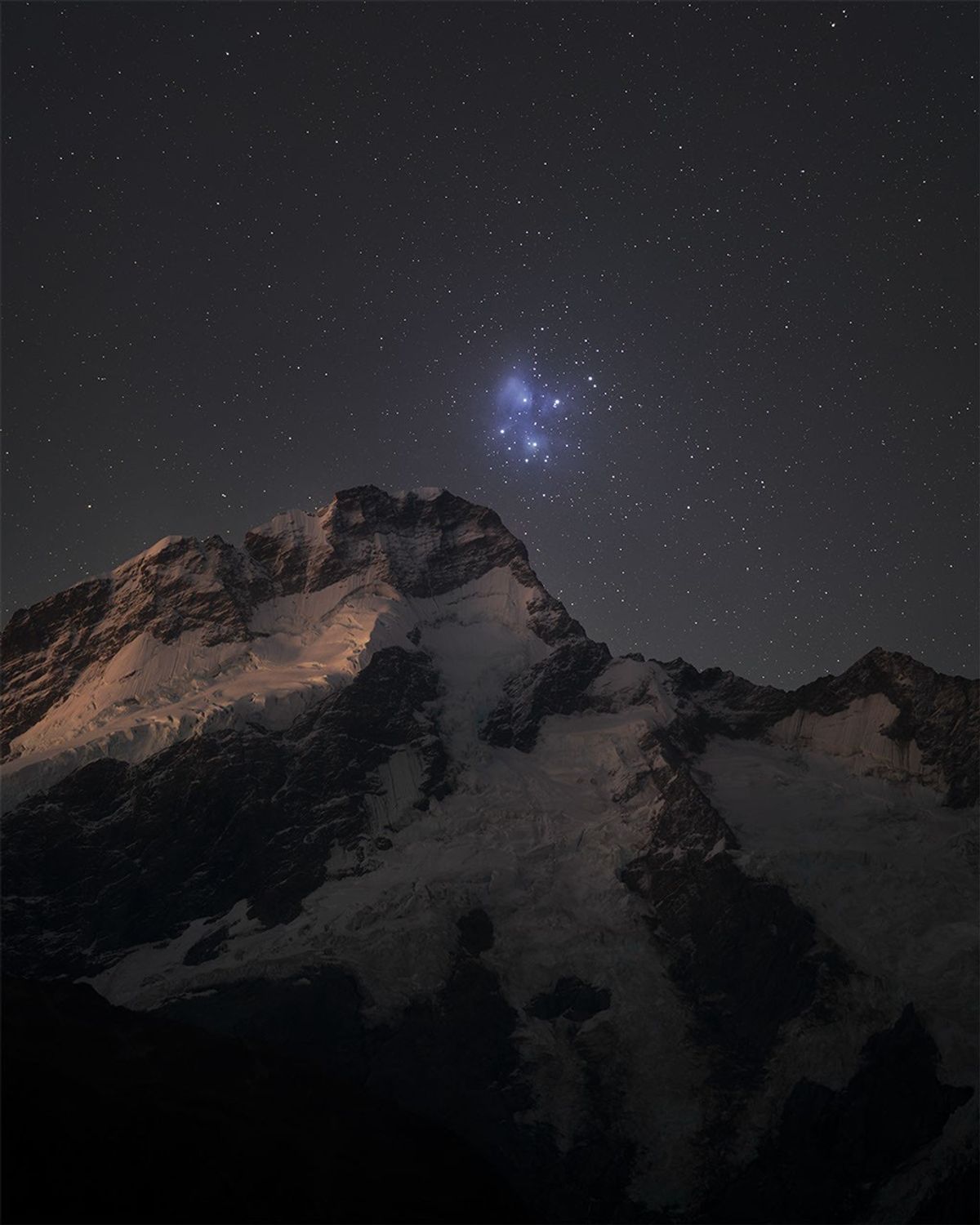
Selected image source ↗ APOD published November 1, 2025. Credit: Max Inwood. A publication-date match, not a photo taken on your date. Independent of NASA.
Read the original APOD for the astronomer’s explanation and full image credits. Its text is preserved in the archive as published.
The lovely Pleiades star cluster shines in Earth's night sky, a compact group of stars some 400 light-years distant toward the constellation Taurus and the Orion Arm of our Milky Way galaxy. Recognized since ancient times, the remarkable celestial gathering is visible to the unaided eye. The Pleiades cluster is also well-placed for viewing from both northern and southern hemispheres, and over the centuries has become connected to many cultural traditions and celebrations, including the cross-quarter day celebration Halloween. In Greek myth, the Pleiades were seven daughters of the astronomical titan Atlas and sea-nymph Pleione. Galileo first sketched the star cluster viewed through his telescope with stars too faint to be seen by eye and Charles Messier recorded the position of the cluster as the 45th entry in his well-known catalog of things which are not comets. In this dramatic night skyscape from planet Earth, the stars of the Pleiades appear embedded in dusty blue reflection nebulae, poised above Mt Sefton, one of the tallest peaks in New Zealand. There known as Matariki, the star cluster is associated with the celebration of the Maori new year.
Image credit: Max Inwood
Updated · APOD entries through