November 14, 2025
November 14, 2025
A little universe, just for you
Free PNG · 1080 × 1350 · No account needed
Image rights and credit requirements apply when sharing or reusing imagery.
Your celebration date stays the same. Each image keeps its actual publication date.
Selected image source ↗ APOD published November 14, 2025. Credit: Samil Cabrera. A publication-date match, not a photo taken on your date. Independent of NASA.
Read the original APOD for the astronomer’s explanation and full image credits. Its text is preserved in the archive as published.
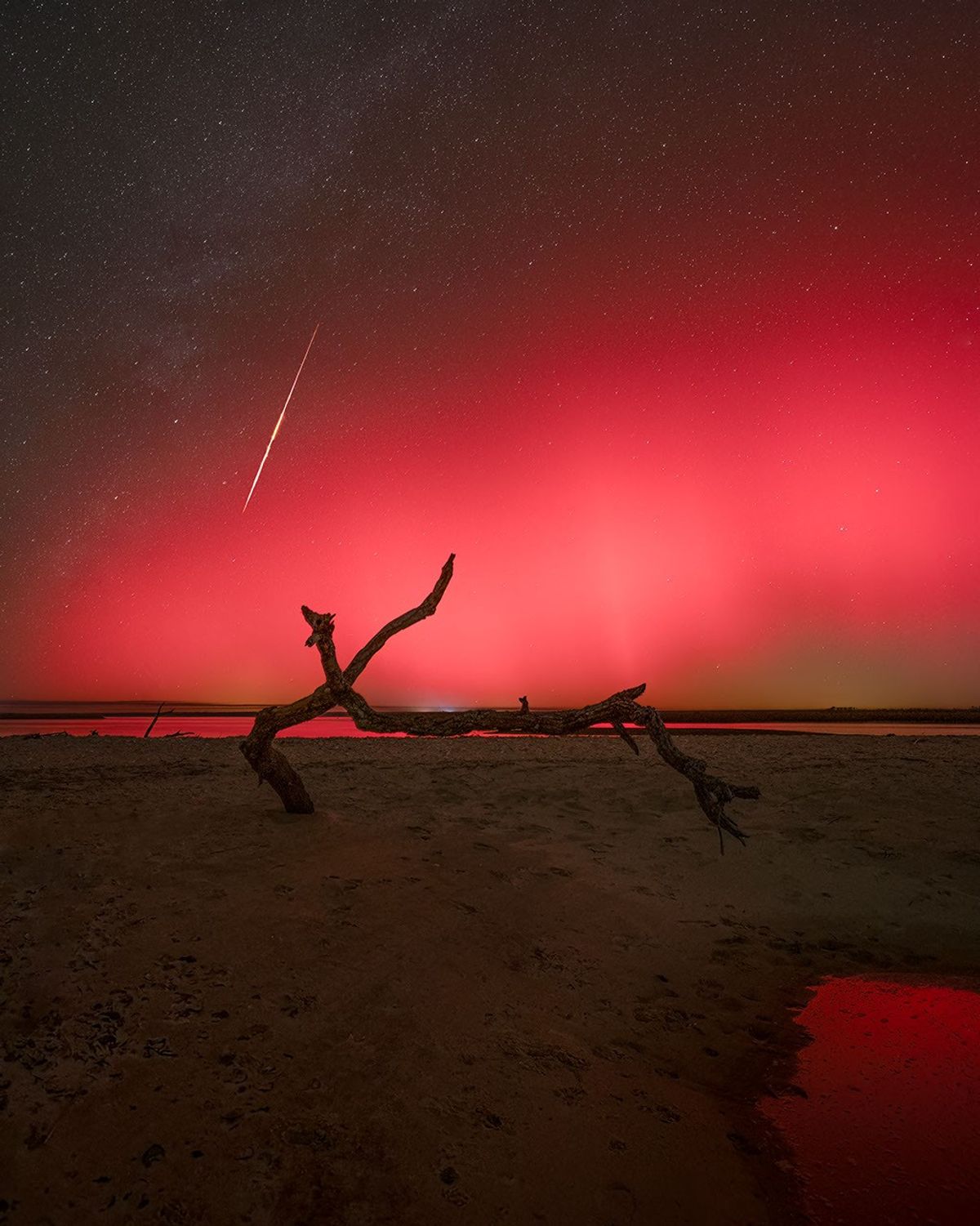
Northern lights have come to Florida skies. In fact, the brilliant streak of a Northern Taurid meteor flashes through the starry night sky above the beach in this sea and skyscape, captured from Shired Island, Florida on November 11. Meteors from the annual Northern Taurid meteor shower are expected this time of year. But the digital camera exposure also records the shimmering glow of aurora, a phenomenon more often seen from our fair planet's higher geographical latitudes. Also known as aurora borealis, these northern lights are part of recent, wide spread auroral activity caused by strong geomagnetic storms. In the last few days, stormy spaceweather has been triggered by multiple Earth impacting coronal mass ejections and intense solar activity.
Image credit: Samil Cabrera
Updated · APOD entries through