May 27, 2026
May 27, 2026
A little universe, just for you
Free PNG · 1080 × 1350 · No account needed
Image rights and credit requirements apply when sharing or reusing imagery.
Your celebration date stays the same. Each image keeps its actual publication date.
Selected image source ↗ APOD published May 27, 2026. Credit: Bernard Miller Text: Keighley Rockcliffe (NASA GSFC, UMBC CSST, CRESST II). A publication-date match, not a photo taken on your date. Independent of NASA.
Read the original APOD for the astronomer’s explanation and full image credits. Its text is preserved in the archive as published.
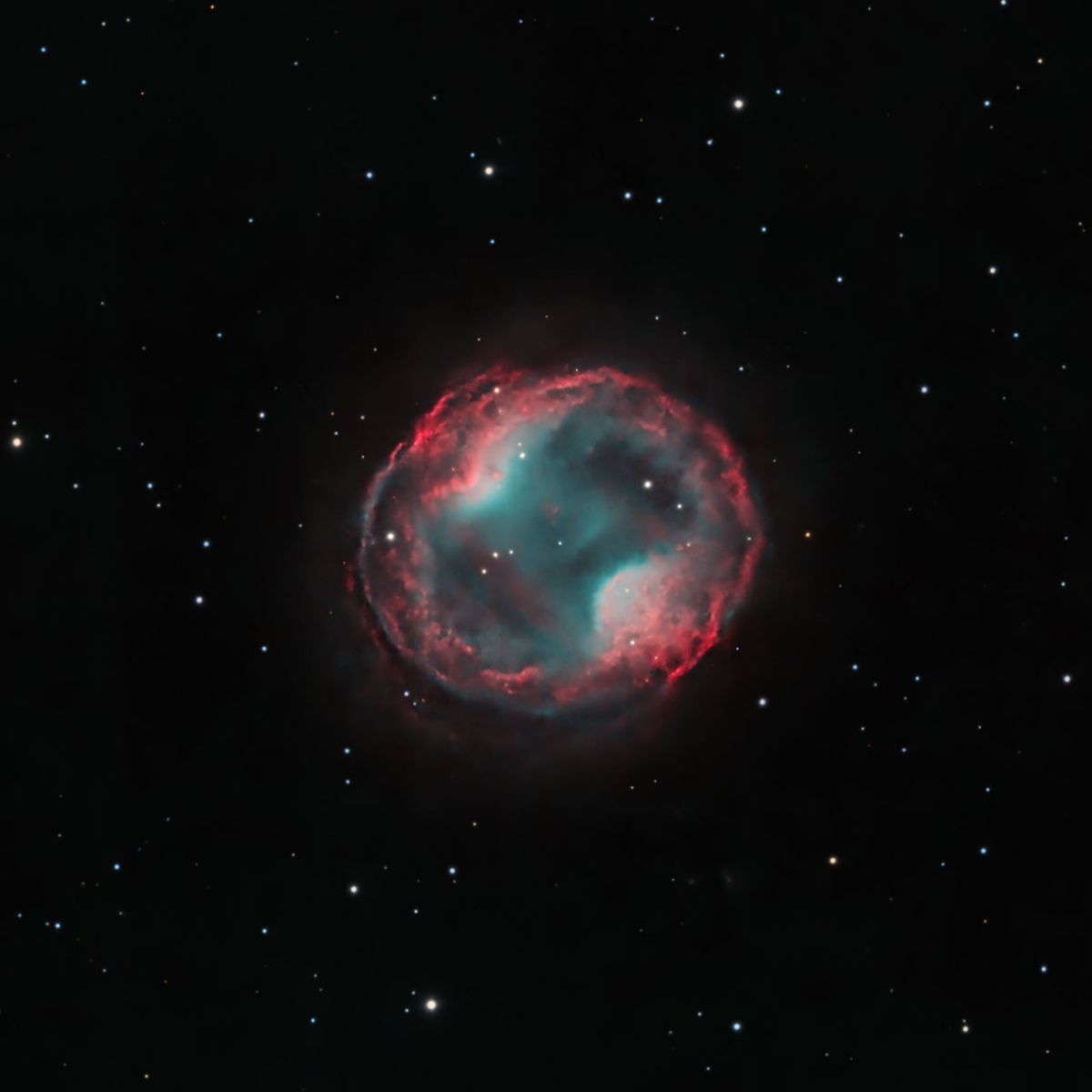
What is a pair of headphones doing in the sky? Today’s image features the Headphone Nebula, also known as PK 164 +31.1 or Jones-Emberson 1. This planetary nebula, the remnant of a dying Sun-like star, faintly occupies an angular region of the Lynx constellation about 1/5th the diameter of the full moon. The red and blue-ish green colors trace hydrogen and oxygen atoms, respectively, that have been excited and ionized by the nebula's central white dwarf. The headphone shape, where two lobes of hydrogen puncture the inner region of oxygen, adds this object to a long list of oddly shaped nebulae. The morphology of such strange nebulae hint at the presence of a stellar or planetary companion, which can stir the material flowing out from the dying star. You can listen to Hubble and JWST sonifications of planetary nebulae through your very own headphones!
Image credit: Bernard Miller Text: Keighley Rockcliffe (NASA GSFC, UMBC CSST, CRESST II)
Updated · APOD entries through