May 15, 2026
May 15, 2026
A little universe, just for you
Free PNG · 1080 × 1350 · No account needed
Image rights and credit requirements apply when sharing or reusing imagery.
Your celebration date stays the same. Each image keeps its actual publication date.
Selected image source ↗ APOD published May 15, 2026. Credit: Chester Hall-Fernandez. A publication-date match, not a photo taken on your date. Independent of NASA.
Read the original APOD for the astronomer’s explanation and full image credits. Its text is preserved in the archive as published.
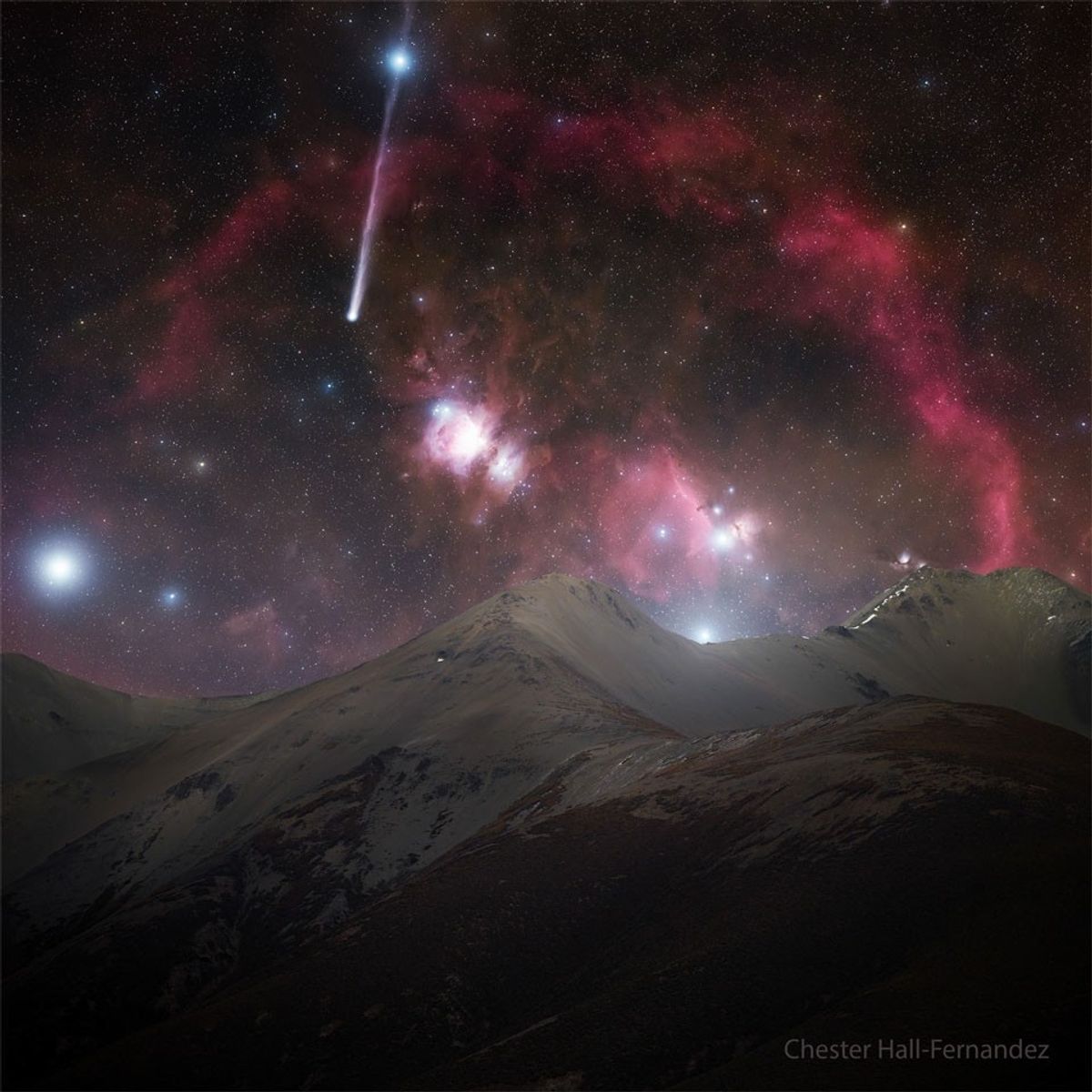
Comet R3 PanSTARRS might be best remembered as an Orion comet. A key reason is because Comet C/2025 R3 (PanSTARRS) was near its most spectacular -- in terms of tail visibility -- when passing in front of the iconic constellation. Although rare, other bright comets, too, have ventured across Orion, including Lovejoy in 2015, Hale-Bopp in 1997, and the Great Comet of 1264. Best visible in long duration exposures, the featured image was captured last week from the Craigieburn Mountain Range in New Zealand. Visible in the deep background image are the Orion Nebula, Barnard's Loop, and through R3's tail, the bright star Saiph, the sixth brightest star in the constellation of Orion. Comet R3 PanSTARRS continues to fade as it moves further south, passing into the constellation of the Unicorn (Monoceros) in the next few days. Sky Surprise: What picture did APOD feature on your birthday? (after 1995)
Image credit: Chester Hall-Fernandez
Updated · APOD entries through