May 13, 2026
May 13, 2026
A little universe, just for you
Free PNG · 1080 × 1350 · No account needed
Image rights and credit requirements apply when sharing or reusing imagery.
Your celebration date stays the same. Each image keeps its actual publication date.
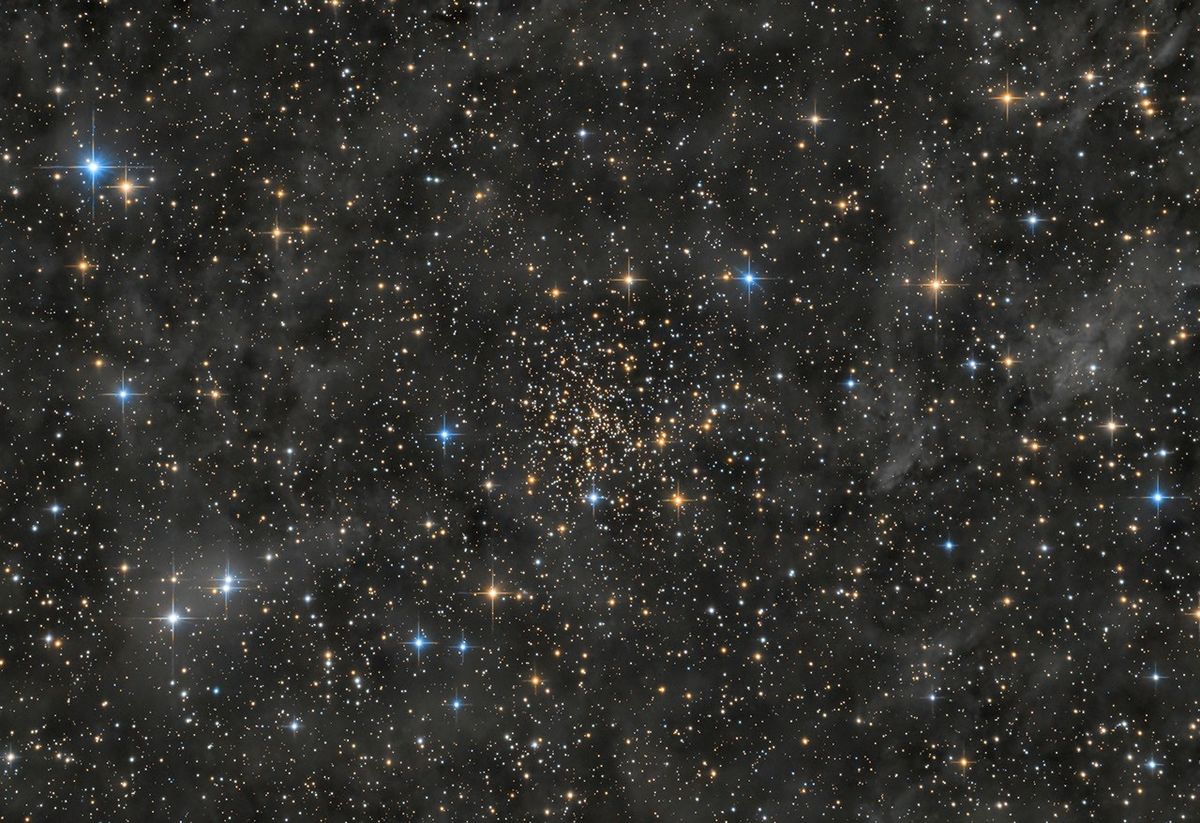
Selected image source ↗ APOD published May 13, 2026. Credit: Neven Krcmarek. A publication-date match, not a photo taken on your date. Independent of NASA.
Behind the original result
Read the original APOD for the astronomer’s explanation and full image credits. Its text is preserved in the archive as published.
The New General Catalog of star clusters and nebulae really isn't so new. In fact, it was published in 1888 - an effort by J. L. E. Dreyer to consolidate the work of astronomers William, Caroline, and John Herschel along with others into a useful single, complete catalog of astronomical discoveries and measurements. Dreyer's work was largely successful and is still important today, as this famous catalog continues to lend its "NGC" to bright clusters, galaxies, and nebulae. Take for example the star cluster known as NGC 188 (item number 188 in the NGC compilation). It lies about 6,000 light-years distant in the northern constellation Cepheus and represents a galactic or open star cluster. With an age of about 7 billion years, NGC 188 is old for an open cluster. Its old, evolved red giant stars have yellowish hues in this colorful, deep sky view. NGC 188 also enjoys the designation Caldwell 1 in a modern compilation of deep sky objects. Located well above the plane of the Milky Way and seen in the direction of planet Earth's north celestial pole, the ancient stellar group is known to some as the Polarissima Cluster.
Image credit: Neven Krcmarek
Updated · APOD entries through