March 8, 2026
March 8, 2026
A little universe, just for you
Free PNG · 1080 × 1350 · No account needed
Image rights and credit requirements apply when sharing or reusing imagery.
Your celebration date stays the same. Each image keeps its actual publication date.
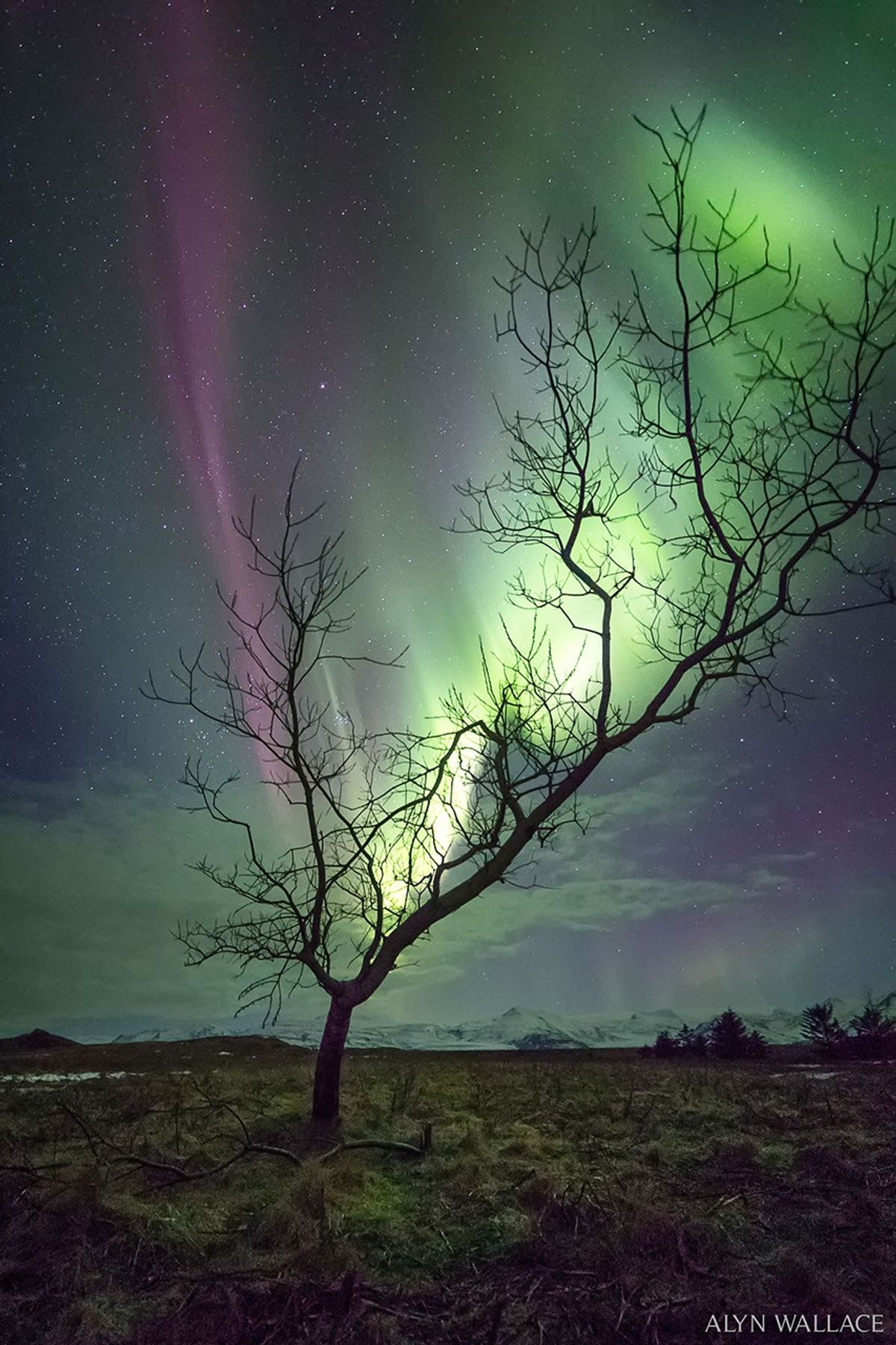
Selected image source ↗ APOD published March 8, 2026. Credit: Alyn Wallace. A publication-date match, not a photo taken on your date. Independent of NASA.
Read the original APOD for the astronomer’s explanation and full image credits. Its text is preserved in the archive as published.
Yes, but can your tree do this? Pictured is a visual coincidence between the dark branches of a nearby tree and bright glow of a distant aurora. The beauty of the aurora -- combined with how it seemed to mimic a tree right nearby -- mesmerized the photographer to such a degree that he momentarily forgot to take pictures. When viewed at the right angle, it seemed that this tree had aurora for leaves. Fortunately, before the aurora morphed into a different overall shape, he came to his senses and captured the awe-inspiring momentary coincidence. Typically triggered by solar explosions, aurora are caused by high energy electrons impacting the Earth's atmosphere around 150 kilometers up. The unusual Earth-sky collaboration was witnessed in March of 2017 in Iceland. Sky Surprise: What picture did APOD feature on your birthday? (after 1995)
Image credit: Alyn Wallace
Updated · APOD entries through