March 5, 2026
March 5, 2026
A little universe, just for you
Free PNG · 1080 × 1350 · No account needed
Image rights and credit requirements apply when sharing or reusing imagery.
Your celebration date stays the same. Each image keeps its actual publication date.
Selected image source ↗ APOD published March 5, 2026. Credit: Satoru Murata; Text: Keighley Rockcliffe (NASA GSFC, UMCP, CRESST II). A publication-date match, not a photo taken on your date. Independent of NASA.
Read the original APOD for the astronomer’s explanation and full image credits. Its text is preserved in the archive as published.
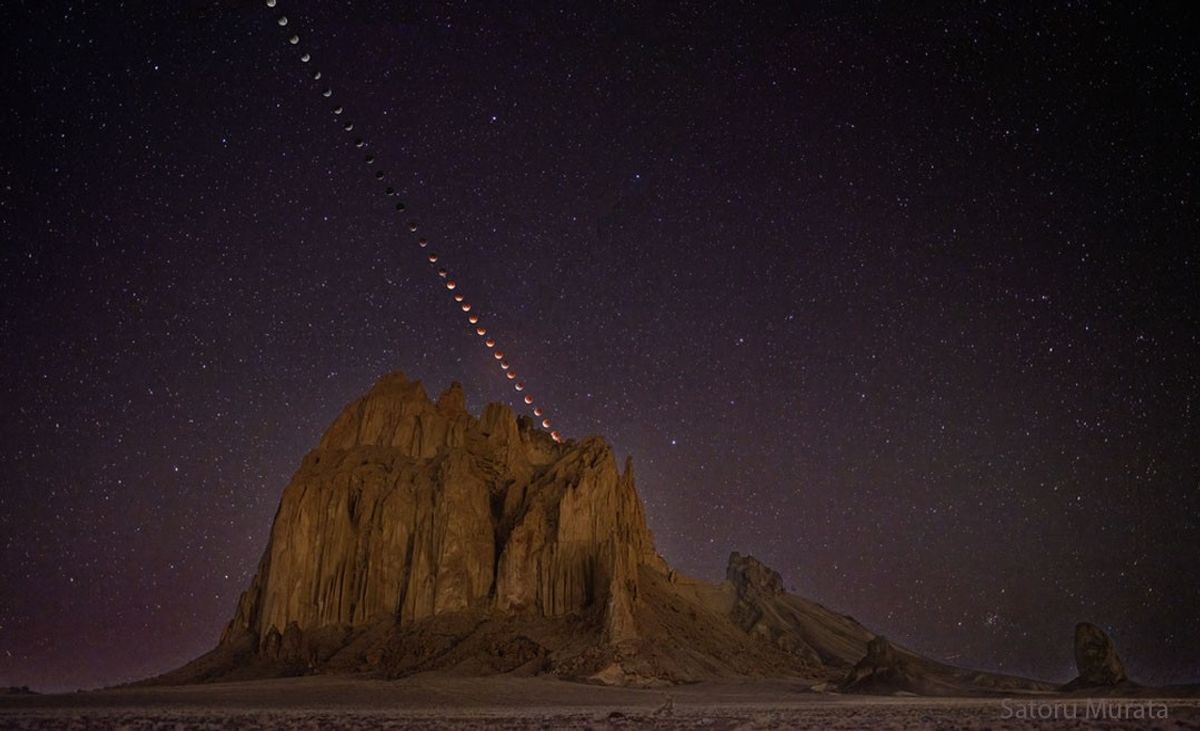
rlier this week, Earth’s shadow swept across the full Moon in the year’s only total lunar eclipse. This stunning sequence combines images showing the Moon’s path across the night sky. Each lunar image captures our planet’s shadow gradually engulfing the Moon, culminating in its red glow. Sunlight scatters and refracts as it passes through Earth’s atmosphere toward the Moon. Shorter wavelength light (blue and green) scatters more efficiently, leaving red, orange, and yellow hues to paint the lunar surface. Tsé Bit'a'í (”rock with wings”, also known as Shiprock), located in Navajo Nation, provides a powerful volcanic foreground central to this photo and to stories of Navajo origin, adventure, and heroism. As the first full moon of the lunar new year, this eclipse held significance across cultures. Visible from East Asia to North America, this eclipse united observers across great distances, a cosmic reminder that we share the same sky. Growing Gallery: Total Lunar Eclipse of March 3
Image credit: Satoru Murata; Text: Keighley Rockcliffe (NASA GSFC, UMCP, CRESST II)
Updated · APOD entries through