March 14, 2026
March 14, 2026
A little universe, just for you
Free PNG · 1080 × 1350 · No account needed
Image rights and credit requirements apply when sharing or reusing imagery.
Your celebration date stays the same. Each image keeps its actual publication date.
Selected image source ↗ APOD published March 14, 2026. Full image credits are on the original APOD entry below. A publication-date match, not a photo taken on your date. Independent of NASA.
Read the original APOD for the astronomer’s explanation and full image credits. Its text is preserved in the archive as published.
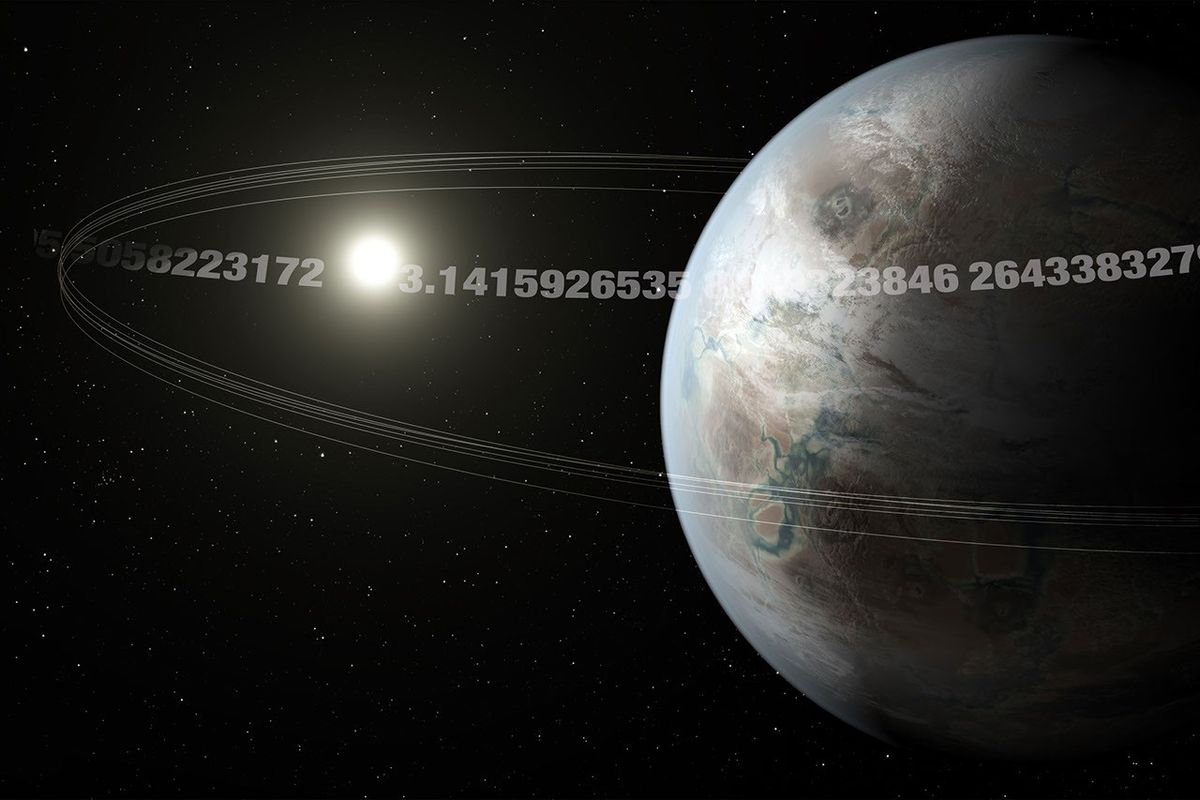
Want to visit a planet that has 3.14 days in a year? Then plan a trip to K2-315b, an earth-sized planet orbiting around a cool, red, M dwarf star about once every 3.14 days. The exoplanet's discovery, based on publicly available data from the planet-hunting Kepler Space Telescope's extended K2 mission, was announced in 2020. K2-315b's measured orbital period in days is nearly equal to the extremely popular irrational number Pi. That puts the exoplanet so close to its parent star that its surface is likely very warm, baking-hot in fact. And this Pi planet is over 185 light-years away. So instead of trying to arrange for an interstellar vacation to K2-315b, there may be easier and more comfortable ways for you to celebrate Pi day on planet Earth.
Updated · APOD entries through