March 13, 2026
March 13, 2026
A little universe, just for you
Free PNG · 1080 × 1350 · No account needed
Image rights and credit requirements apply when sharing or reusing imagery.
Your celebration date stays the same. Each image keeps its actual publication date.
Selected image source ↗ APOD published March 13, 2026. Credit: Jason Perry. A publication-date match, not a photo taken on your date. Independent of NASA.
Read the original APOD for the astronomer’s explanation and full image credits. Its text is preserved in the archive as published.
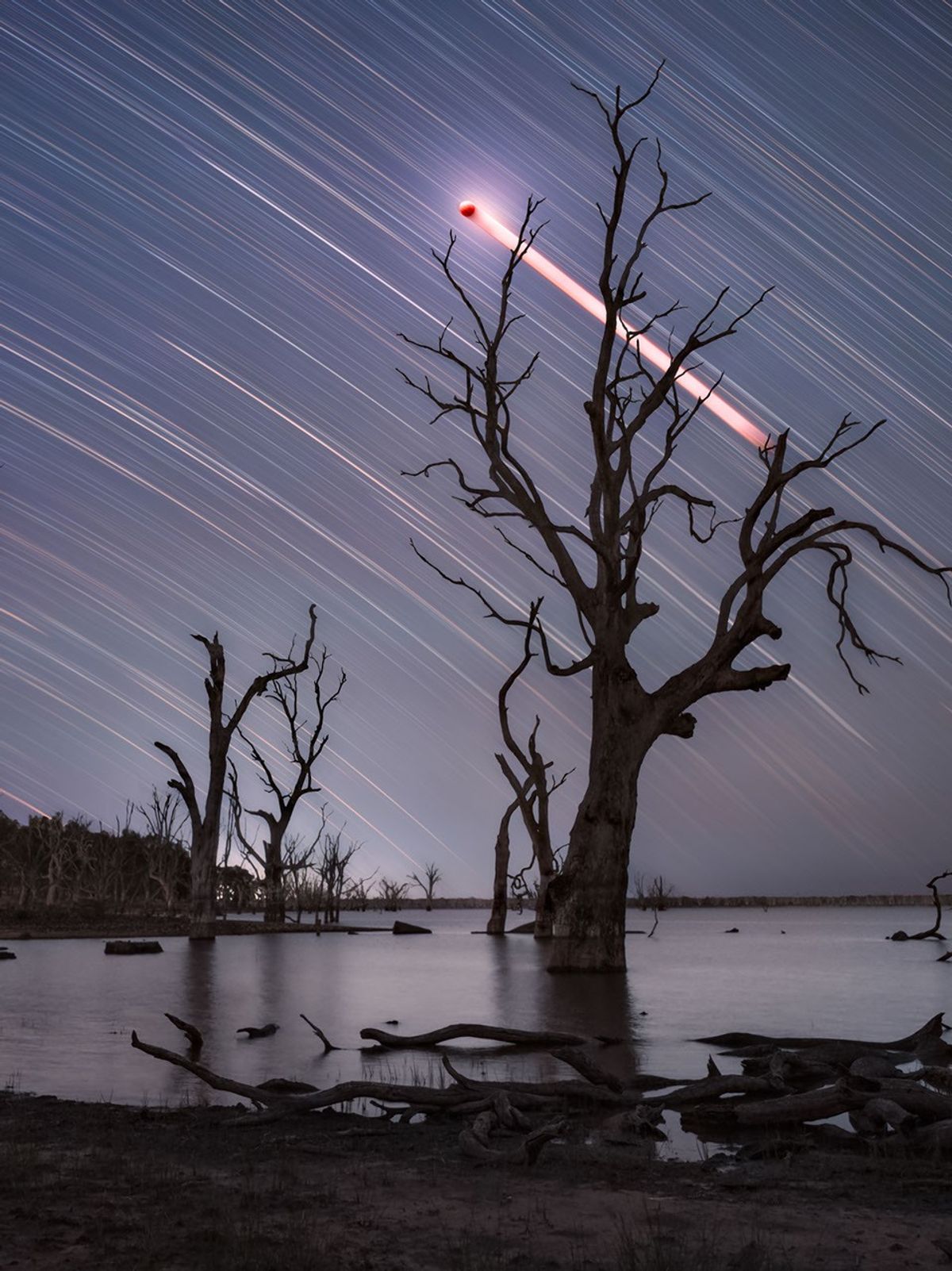
In this composited night skyscape, stacked exposures trace graceful star trails above Lake Toolondo, Victoria, Australia, planet Earth. Captured while the lunar eclipse of March 3 was in progress, the exposures used were made during the hour-long total eclipse phase. So faint star trails are easily visible along with the trail of the reddened Moon in eclipse-darkened skies above the lake and trees. Of course, the apparent motion of Moon and stars revealed in the timelapse composite reflect the Earth's daily rotation around its axis. Dramatically punctuating the Moon's trail as totality ended, a single, separate telephoto image of the totally eclipsed Moon was scaled and blended into the scene. Growing Gallery: Total Lunar Eclipse of March 3
Image credit: Jason Perry
Updated · APOD entries through