June 8, 2026
June 8, 2026
A little universe, just for you
Free PNG · 1080 × 1350 · No account needed
Image rights and credit requirements apply when sharing or reusing imagery.
Your celebration date stays the same. Each image keeps its actual publication date.
Selected image source ↗ APOD published June 8, 2026. Credit: Jakub Kuřák & Martin Mašek (FZU of the Czech Academy of Sciences). A publication-date match, not a photo taken on your date. Independent of NASA.
Read the original APOD for the astronomer’s explanation and full image credits. Its text is preserved in the archive as published.
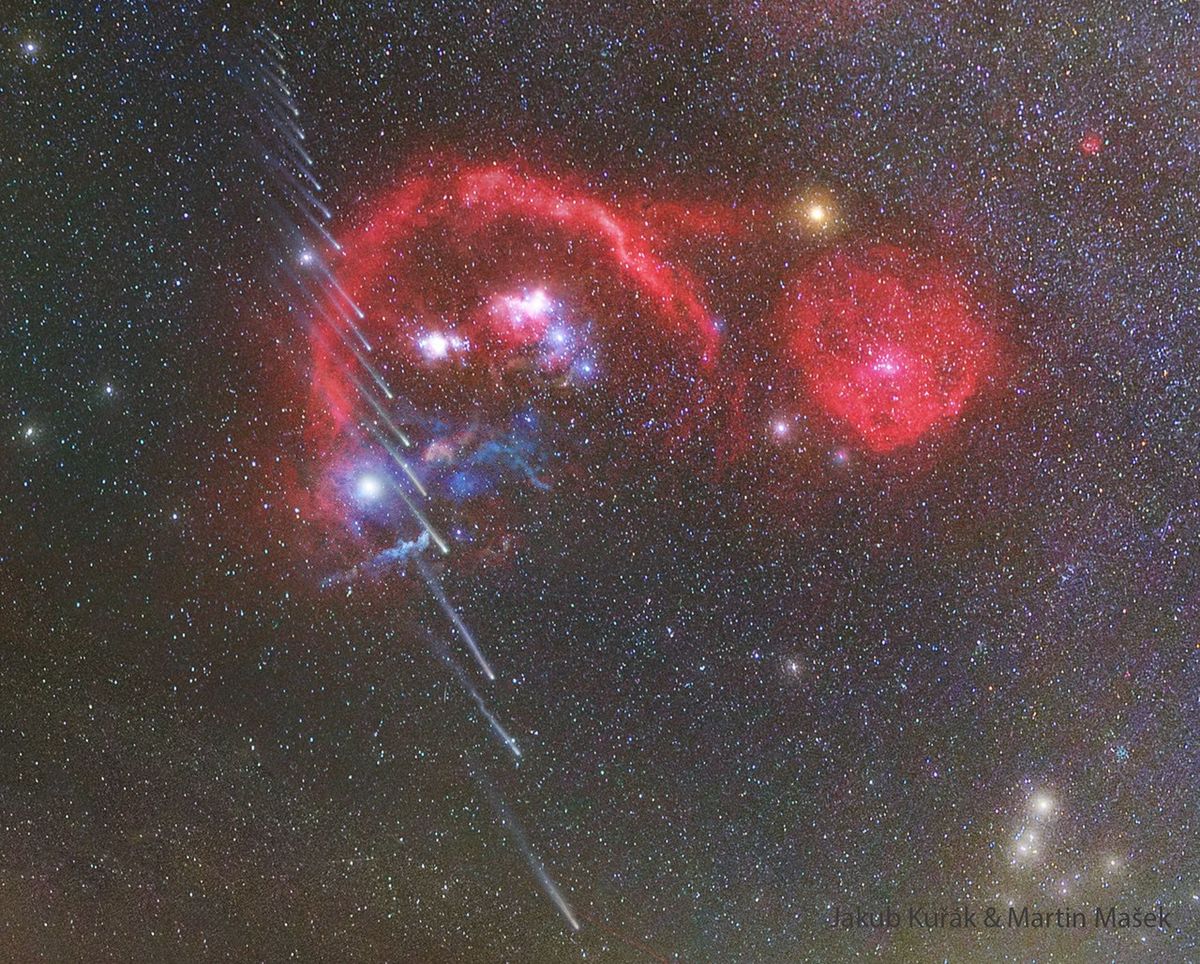
What happens to a comet as it leaves our inner Solar System? Now, the arrival of a comet into the inner Solar System is typically heralded with great fanfare and high hopes that the comet will become bright and photogenic. But on the way out, the comet's nucleus is less warmed by the Sun, less gas and dust are expelled, the bright coma around the nucleus shrinks and fades, and the tail length drops off. Many comets will then return to the outer Solar System and only return in hundreds or thousands of years. In contrast, some comets -- like Comet C/2025 R3 (PanSTARRS) -- receive a gravitational kick from the planets and so will never return. Pictured, Comet R3 PanSTARRs was imaged deeply many nights in early to mid-May near Cerro Paranal in Chile. Later images appear closer to the top and clearly show the shrinking ion tail. Comet R3 Gallery: Comet R3 PanSTARRS in 2026
Image credit: Jakub Kuřák & Martin Mašek (FZU of the Czech Academy of Sciences)
Updated · APOD entries through