June 4, 2026
June 4, 2026
A little universe, just for you
Free PNG · 1080 × 1350 · No account needed
Image rights and credit requirements apply when sharing or reusing imagery.
Your celebration date stays the same. Each image keeps its actual publication date.
Selected image source ↗ APOD published June 4, 2026. Full image credits are on the original APOD entry below. A publication-date match, not a photo taken on your date. Independent of NASA.
Read the original APOD for the astronomer’s explanation and full image credits. Its text is preserved in the archive as published.
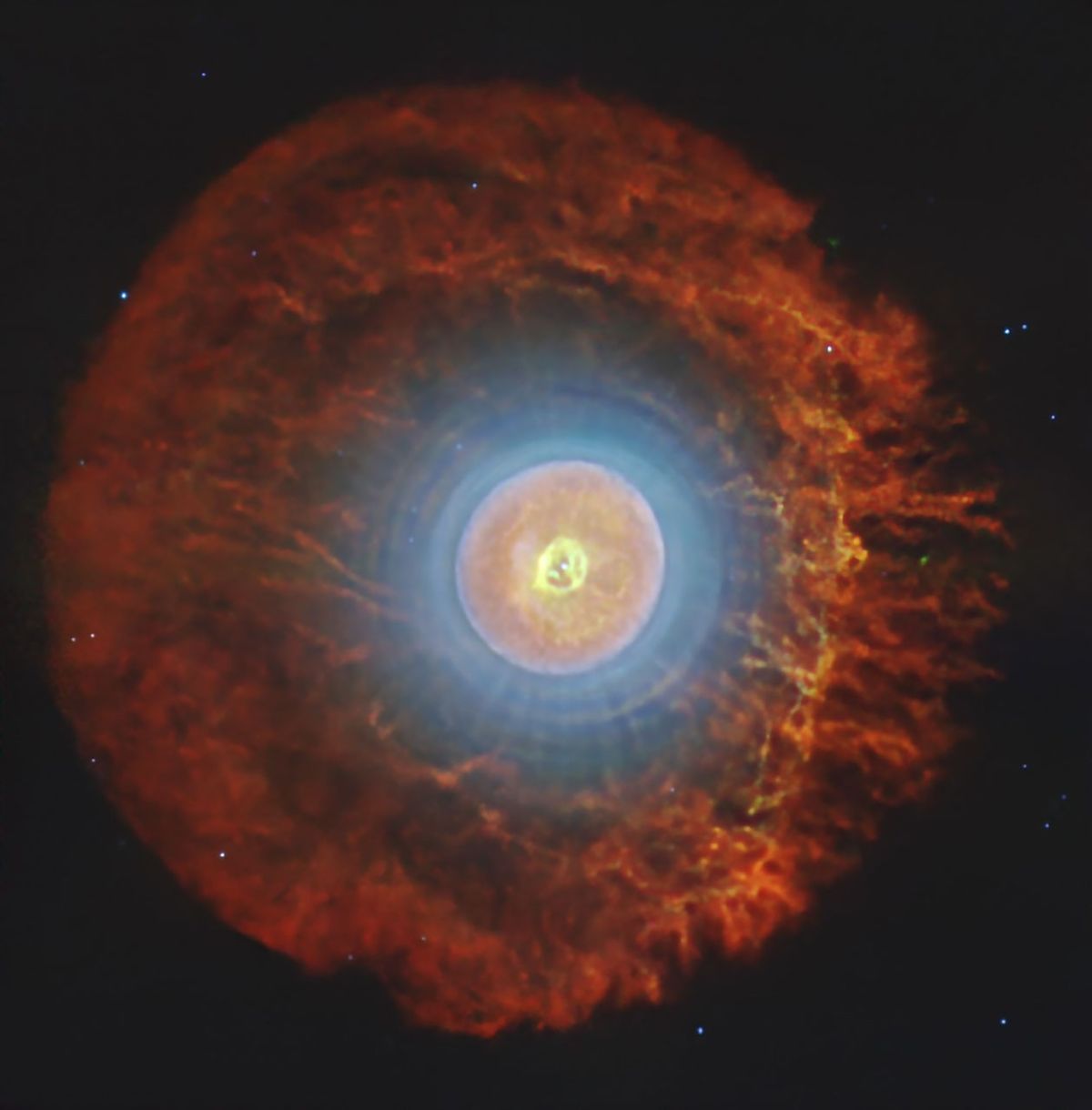
What is happening inside this unusual nebula? Planetary nebula Tc 1, captured here in exquisite detail by the James Webb Space Telescope, is the celestial site where buckyballs were first identified in 2010. Buckminsterfullerene — as buckyballs are officially called — is a molecule with 60 carbon atoms (C60) arranged in the shape of a soccer ball. The molecule is named for architect Buckminster Fuller because of its resemblance to the geodesic dome he helped popularize. Webb’s new data reveal where the C60 molecules live in this nebula, and the geometry is striking: they populate a thin spherical shell around the central star, visible here as the bright edge of the nebula’s glowing orange central region. Look closely near the nebula’s heart and a more perplexing feature emerges: a delicate structure shaped uncannily like an upside-down question mark, fitting punctuation for the many questions this nebula still poses.
Updated · APOD entries through