June 30, 2026
June 30, 2026
A little universe, just for you
Free PNG · 1080 × 1350 · No account needed
Image rights and credit requirements apply when sharing or reusing imagery.
Your celebration date stays the same. Each image keeps its actual publication date.
Selected image source ↗ APOD published June 30, 2026. Full image credits are on the original APOD entry below. A publication-date match, not a photo taken on your date. Independent of NASA.
Behind the original result
Read the original APOD for the astronomer’s explanation and full image credits. Its text is preserved in the archive as published.
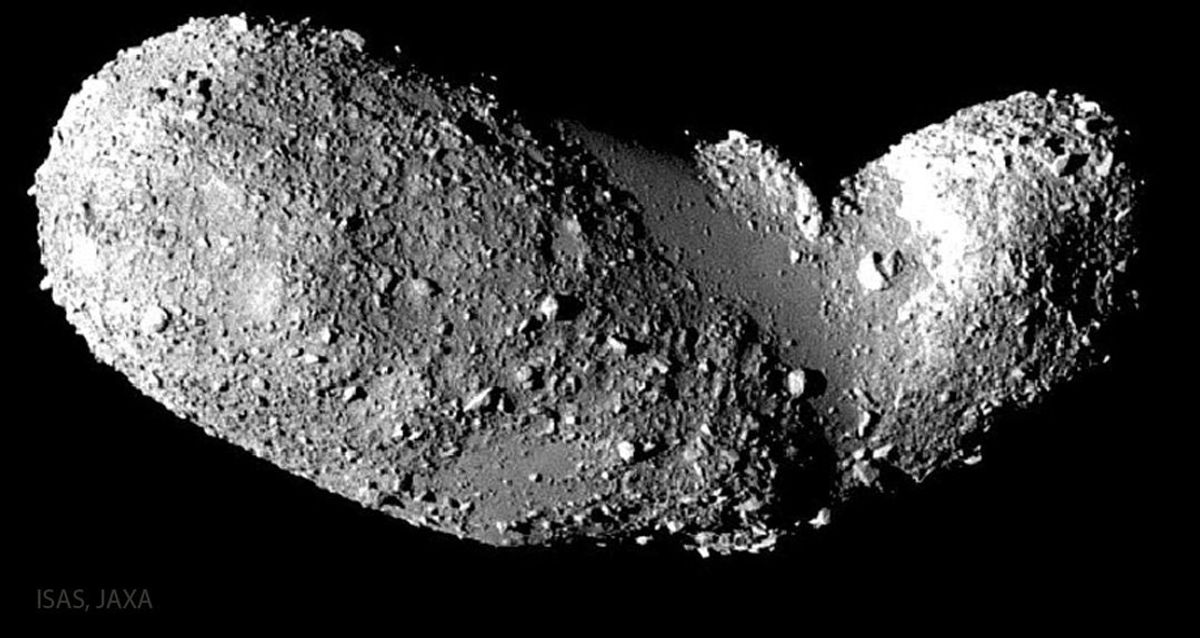
Why are parts of this asteroid's surface so smooth? The answer seems likely to do with the dynamics of an asteroid that is a loose pile of rubble rather than a solid rock. The unusual asteroid Itokawa was visited by the Japanese spacecraft Hayabusa in 2005 which imaged and documented its unusual structure and mysterious lack of craters. Analyses of the border regions between smooth and rugged sections indicate that jostling of the asteroid might be creating segregation between large and small rocks near the surface, like the Brazil nut effect. The robotic Hayabusa actually touched down on one of the smooth patches, dubbed the MUSES Sea, and collected soil samples. These samples were returned to Earth and are not only giving clues to the ancient history of this unusual asteroid, but also about the early years of our entire Solar System. Computer simulations show that 500-meter asteroid Itokawa may impact the Earth within the next few million years. Rocking Space: Today is Asteroid Day
Updated · APOD entries through