June 28, 2026
June 28, 2026
A little universe, just for you
Free PNG · 1080 × 1350 · No account needed
Image rights and credit requirements apply when sharing or reusing imagery.
Your celebration date stays the same. Each image keeps its actual publication date.
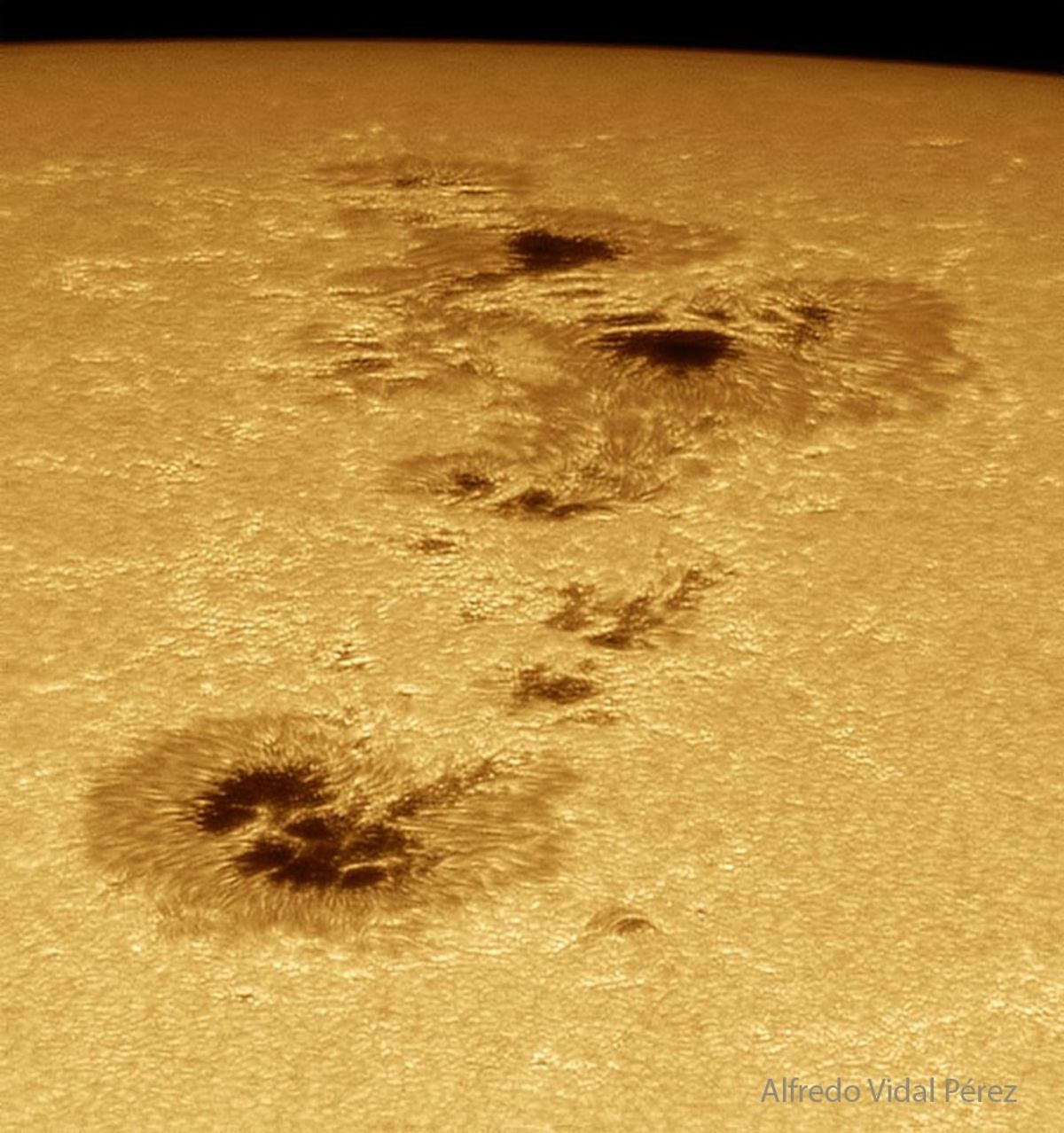
Selected image source ↗ APOD published June 28, 2026. Credit: Alfredo Vidal Pérez. A publication-date match, not a photo taken on your date. Independent of NASA.
Read the original APOD for the astronomer’s explanation and full image credits. Its text is preserved in the archive as published.
Right now, one of the largest sunspot groups in recent history is crossing the Sun. Active Region 4478 is not only big -- it's violent, showing tangled magnetic fields capable of throwing off huge clouds of particles into the Solar System. Some of these CMEs might impact the Earth. At the extreme, these solar storms could cause some Earth-orbiting satellites to malfunction, the Earth's atmosphere to slightly distort, and electrical power grids to surge. When impacting Earth's upper atmosphere, these particles can produce beautiful auroras. Pictured here, AR 4478 and its dark sunspots were captured in visible light a few days ago from Barcelona, Spain. Almost as large as AR 3664 was in 2024, the AR 4478 sunspot group is so big that it is visible just with glasses specially designed to view solar eclipses. This week, skygazing enthusiasts all over the globe will not only be tracking AR 4478 during the day -- but keenly watching night skies for its corresponding bright auroras. Sky Surprise: What picture did APOD feature on your birthday? (after 1995)
Image credit: Alfredo Vidal Pérez
Updated · APOD entries through