June 20, 2026
June 20, 2026
A little universe, just for you
Free PNG · 1080 × 1350 · No account needed
Image rights and credit requirements apply when sharing or reusing imagery.
Your celebration date stays the same. Each image keeps its actual publication date.
Selected image source ↗ APOD published June 20, 2026. Credit: Debra Ceravolo. A publication-date match, not a photo taken on your date. Independent of NASA.
Read the original APOD for the astronomer’s explanation and full image credits. Its text is preserved in the archive as published.
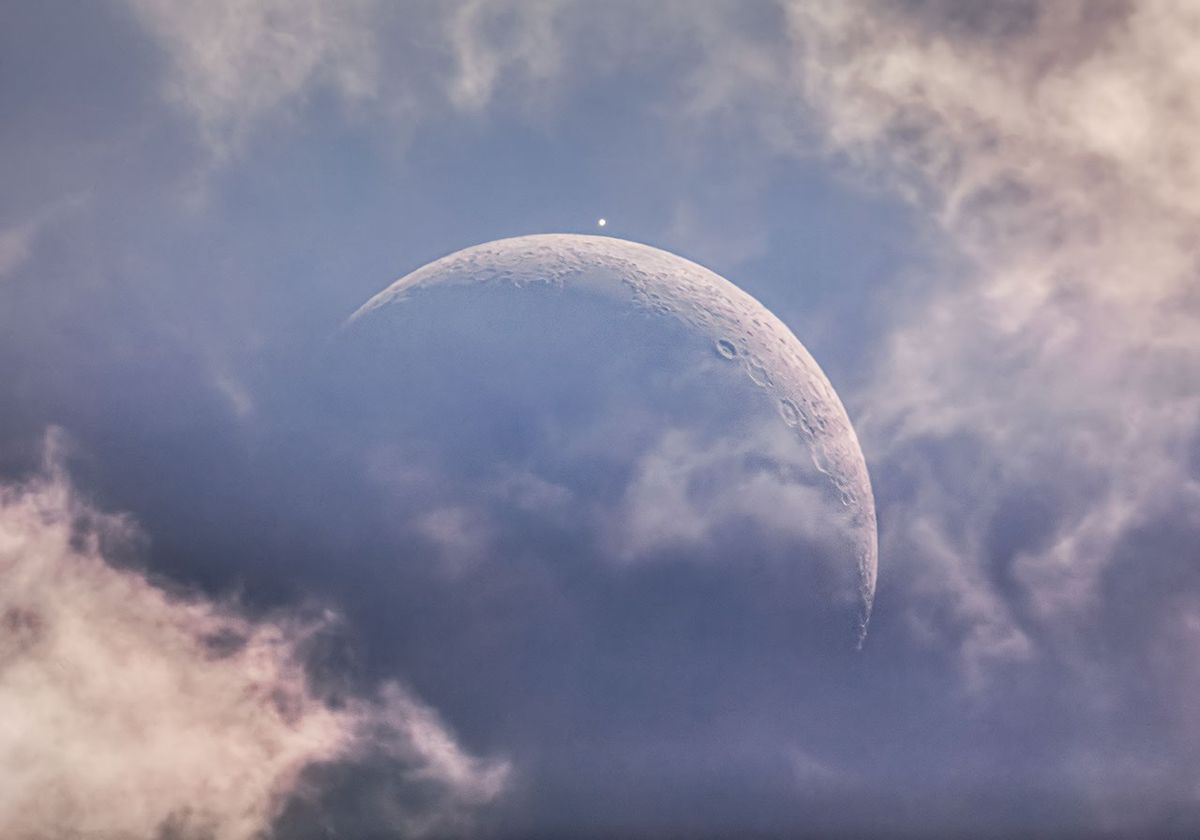
Venus is now appearing on the celestial stage as Earth's brilliant evening star, performing with the Moon, other wandering planets, and bright stars in western skies. For evening sky gazers on June 17, the celestial beacon rose after sunset close by a young, slender, crescent Moon. But from some locations the Moon could be seen to occult or pass in front of Venus. And from a backyard observatory in southern British Columbia, Canada, the lunar occultation was played out in daylight. This stunning telescopic snapshot captured a scene in dramatically cloudy skies, following Venus' hour long disappearance, as the evening star emerged beyond the bright lunar limb.
Image credit: Debra Ceravolo
Updated · APOD entries through