July 7, 2026
July 7, 2026
A little universe, just for you
Free PNG · 1080 × 1350 · No account needed
Image rights and credit requirements apply when sharing or reusing imagery.
Your celebration date stays the same. Each image keeps its actual publication date.
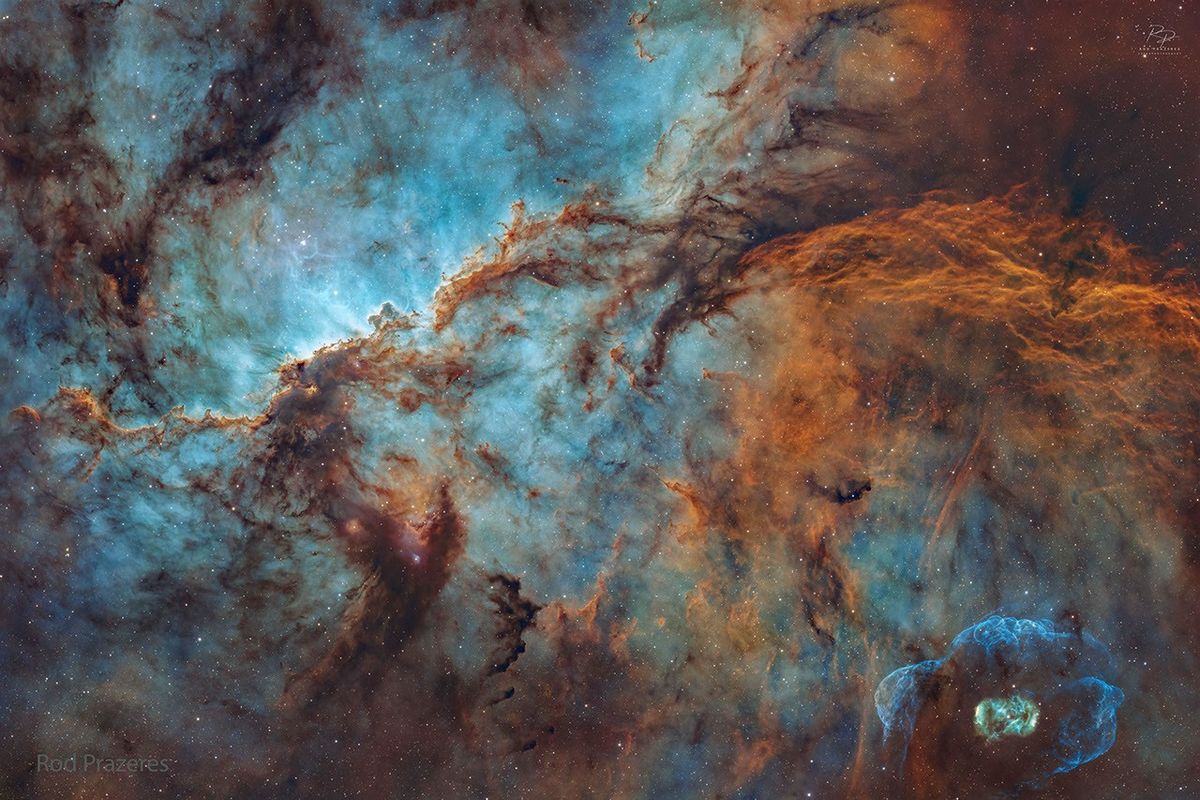
Selected image source ↗ APOD published July 7, 2026. Credit: Rod Prazeres. A publication-date match, not a photo taken on your date. Independent of NASA.
Read the original APOD for the astronomer’s explanation and full image credits. Its text is preserved in the archive as published.
Where can you find dragons fighting in the night sky? In the southern constellation of the Altar: Ara. The dragons are, of course, actually made of suggestively shaped gas and dust. The celestial home of the mythological battling beasts is cataloged as NGC 6188 and located about 4,000 light years away near the edge of a large molecular cloud. Massive, young stars of the embedded Ara OB1 association were formed there only a few million years ago, sculpting the dark shapes and powering the nebular glow with stellar winds and intense ultraviolet radiation. Joining NGC 6188 on this cosmic canvas, visible toward the lower right, is unusual emission nebula NGC 6164, also created by one of the region's massive stars. This impressively wide field picture, captured from Queensland, Australia, spans over 2 degrees (four full Moons).
Image credit: Rod Prazeres
Updated · APOD entries through