July 6, 2026
July 6, 2026
A little universe, just for you
Free PNG · 1080 × 1350 · No account needed
Image rights and credit requirements apply when sharing or reusing imagery.
Your celebration date stays the same. Each image keeps its actual publication date.
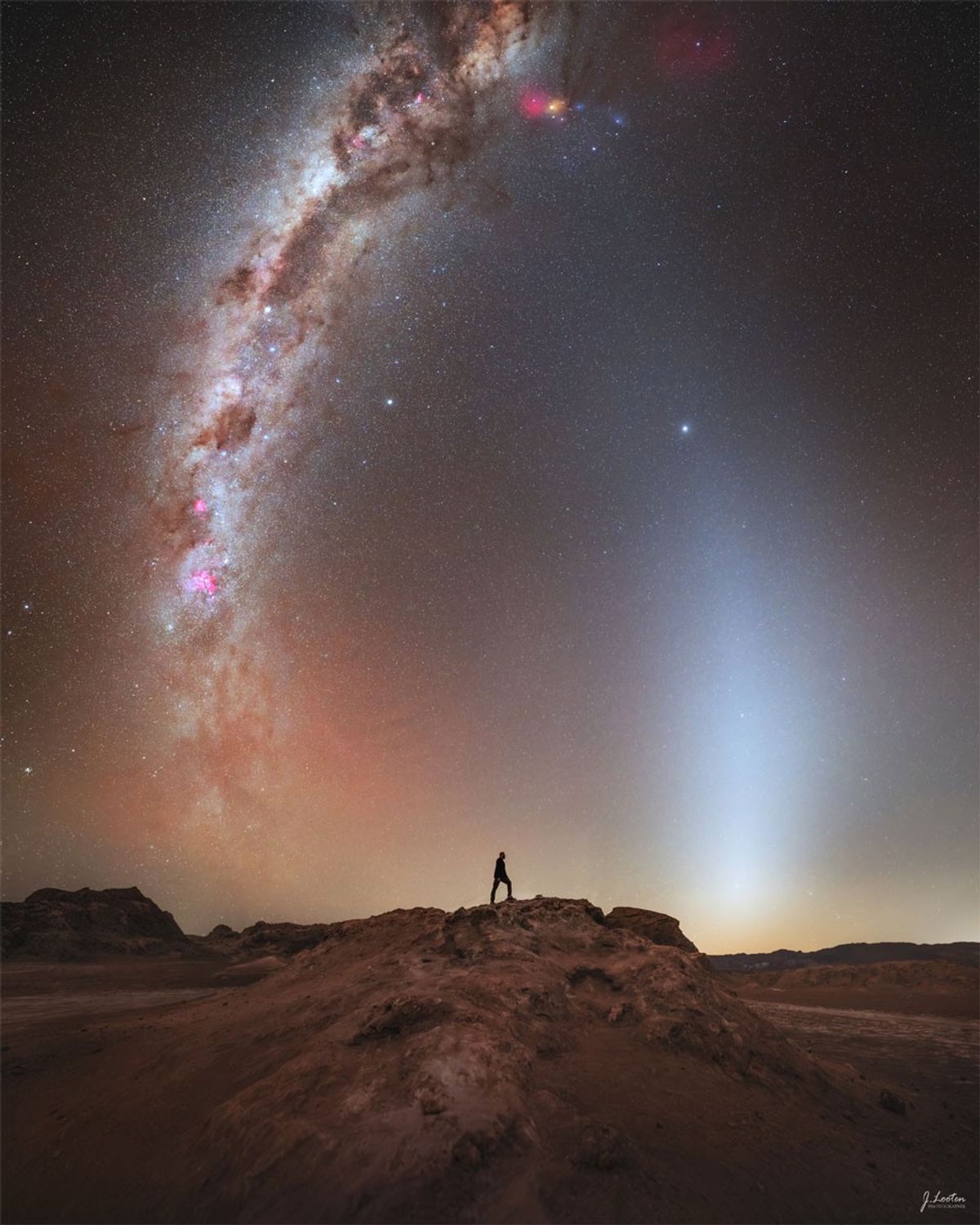
Selected image source ↗ APOD published July 6, 2026. Credit: Julien Looten. A publication-date match, not a photo taken on your date. Independent of NASA.
Read the original APOD for the astronomer’s explanation and full image credits. Its text is preserved in the archive as published.
What are these two bands in the sky? The more commonly seen band is on the left and is the central band of our Milky Way galaxy. Our Sun orbits in the disk of this spiral galaxy so that from inside, it appears as a band of comparable brightness all the way around the sky. The less commonly seen band, on the right, is zodiacal light -- sunlight reflected from dust orbiting the Sun in our Solar System. Zodiacal light is brightest near the Sun and so is best seen just before sunrise or just after sunset. On some evenings, this ribbon of zodiacal light can appear quite prominent. It was discovered only in this century that zodiacal dust was mostly expelled by comets that have passed near Jupiter. The featured image was captured about a year ago from the Atacama Desert in Chile.
Image credit: Julien Looten
Updated · APOD entries through