July 30, 2026
July 30, 2026
A little universe, just for you
Free PNG · 1080 × 1350 · No account needed
Image rights and credit requirements apply when sharing or reusing imagery.
Your celebration date stays the same. Each image keeps its actual publication date.
Selected image source ↗ APOD published July 30, 2026. Credit: Debra Ceravolo Text: Cecilia Chirenti (NASA GSFC, UMCP, CRESST II). A publication-date match, not a photo taken on your date. Independent of NASA.
Read the original APOD for the astronomer’s explanation and full image credits. Its text is preserved in the archive as published.
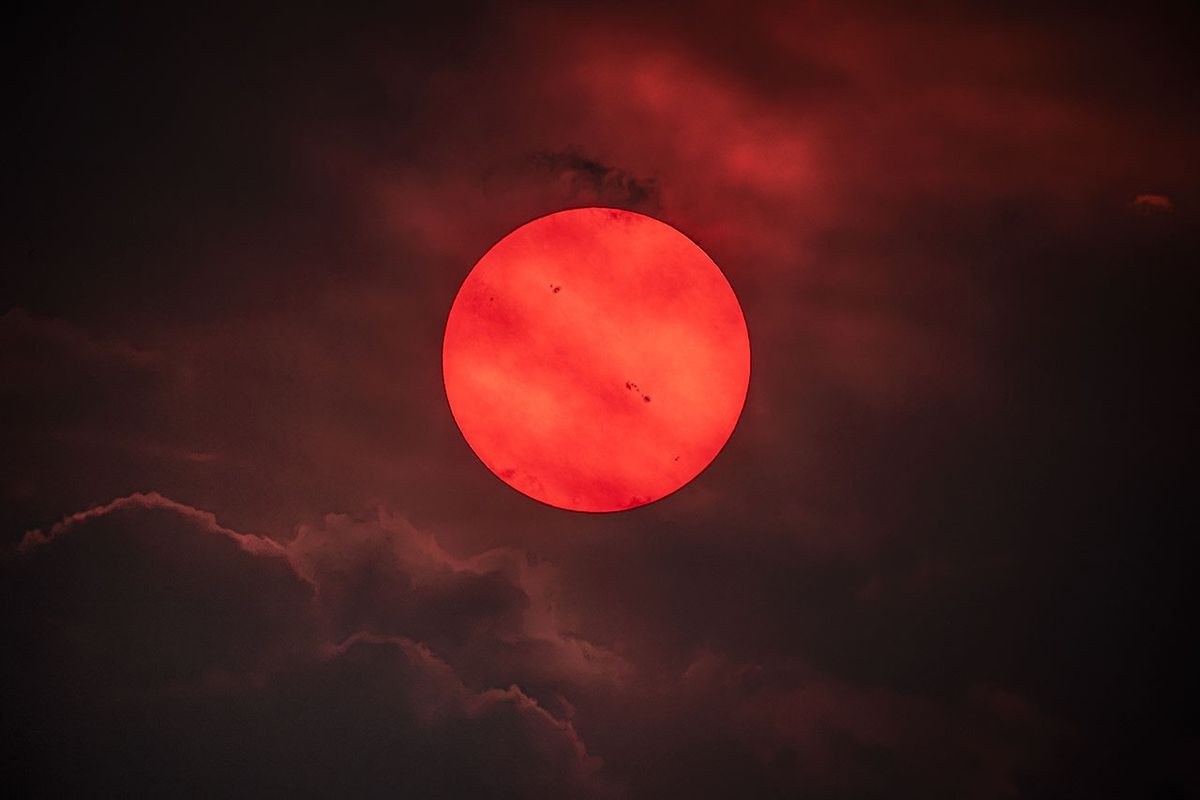
This could be the view from an exoplanet orbiting around a red dwarf star, but it is our own Sun. This image was taken on July 22, 2026, in the Okanagan region in the Canadian province of British Columbia. Wildfire smoke from the Pacific Northwest acted as a solar filter, allowing the photographer to take this photo of the Sun directly. Several sunspots are also visible in this eerie image; just below and right of the center is AR 4493, a fast evolving, giant active solar region and sunspot group. The smoke is made of tiny particles that help block and scatter light with bluer colors, so the light we see coming from the Sun is dimmer and redder than usual (but it is never safe to stare directly at the Sun). Sunsets and sunrises are also more colorful because of the smoke. Some 6 billion years from now, the Sun will actually start to turn redder as it approaches its red giant phase.
Image credit: Debra Ceravolo Text: Cecilia Chirenti (NASA GSFC, UMCP, CRESST II)
Updated · APOD entries through