July 28, 2026
July 28, 2026
A little universe, just for you
Free PNG · 1080 × 1350 · No account needed
Image rights and credit requirements apply when sharing or reusing imagery.
Your celebration date stays the same. Each image keeps its actual publication date.
Selected image source ↗ APOD published July 28, 2026. Credit: Gonzalo Laserna Vargas. A publication-date match, not a photo taken on your date. Independent of NASA.
Read the original APOD for the astronomer’s explanation and full image credits. Its text is preserved in the archive as published.
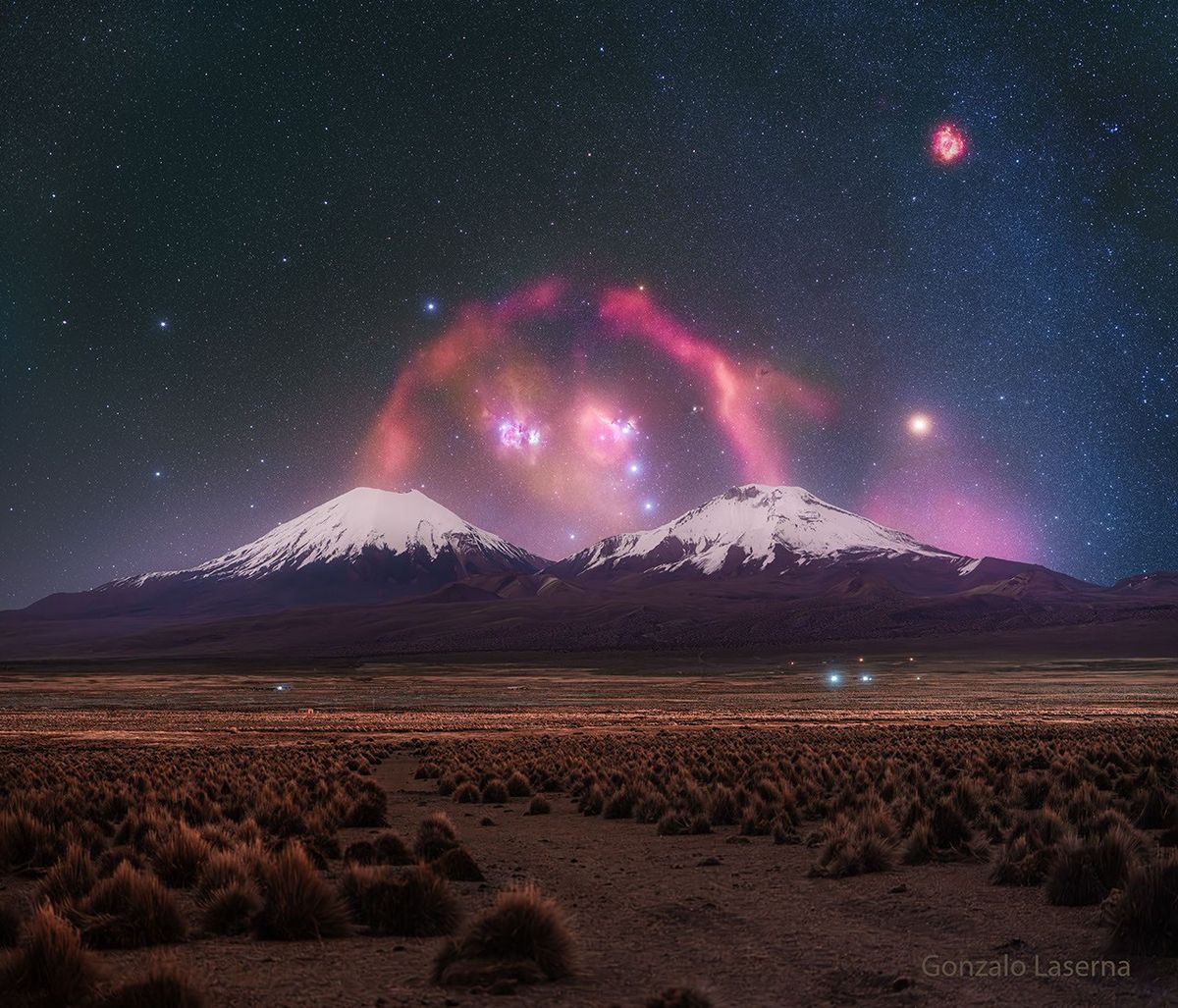
What's connecting these two volcanoes? In ancient folklore, the two volcanoes, Parinacota (left) and Pomerape (right), are connected by representing a mythical prince and princess who engaged in a forbidden romance. Beneath the ground, the two peaks are not known to be connected by a common pool of hot magma, and neither volcano has erupted in the past 1000 years. Above the ground, there is usually nothing in the sky that connects them -- except if you use careful timing and look from a specific location. The featured well-planned image was captured from Bolivia in mid-April with a series of camera exposures taken on the same day and from the same location. Then, Barnard's Loop appeared to connect the volcanic peaks. Also visible in the image is the Orion Nebula in the center, the star Betelgeuse on the right, and the Rosette Nebula on the upper right. Sky Surprise: What picture did APOD feature on your birthday? (after 1995)
Image credit: Gonzalo Laserna Vargas
Updated · APOD entries through