July 11, 2026
July 11, 2026
A little universe, just for you
Free PNG · 1080 × 1350 · No account needed
Image rights and credit requirements apply when sharing or reusing imagery.
Your celebration date stays the same. Each image keeps its actual publication date.
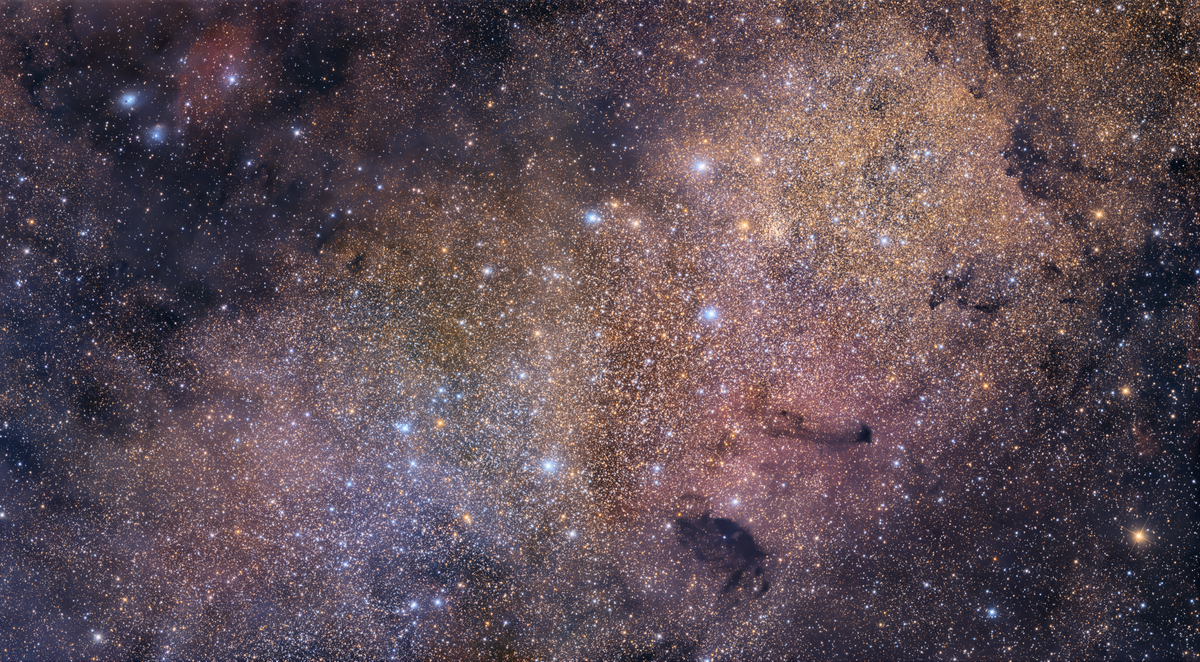
Selected image source ↗ APOD published July 11, 2026. Credit: Chuck Ayoub. A publication-date match, not a photo taken on your date. Independent of NASA.
Read the original APOD for the astronomer’s explanation and full image credits. Its text is preserved in the archive as published.
Unlike most entries in Charles Messier's famous catalog of deep sky objects, M24 is not a bright galaxy, star cluster, or nebula. It's a gap in nearby, obscuring interstellar dust clouds that allows a view of the distant stars in the Sagittarius spiral arm of our Milky Way galaxy. Direct your gaze through this gap with binoculars or a small telescope and you are looking through a window over 300 light-years wide at stars some 10,000 light-years or more from Earth. Sometimes called the Small Sagittarius Star Cloud, M24's luminous stars stretch across this gorgeous interstellar scene. Spanning over four full moons on the sky toward the constellation Sagittarius, the telescopic field of view includes dark markings B92 and B93 near the center of M24, along with other clouds of dust and glowing nebulae toward the center of the Milky Way.
Image credit: Chuck Ayoub
Updated · APOD entries through