January 8, 2026
January 8, 2026
A little universe, just for you
Free PNG · 1080 × 1350 · No account needed
Image rights and credit requirements apply when sharing or reusing imagery.
Your celebration date stays the same. Each image keeps its actual publication date.
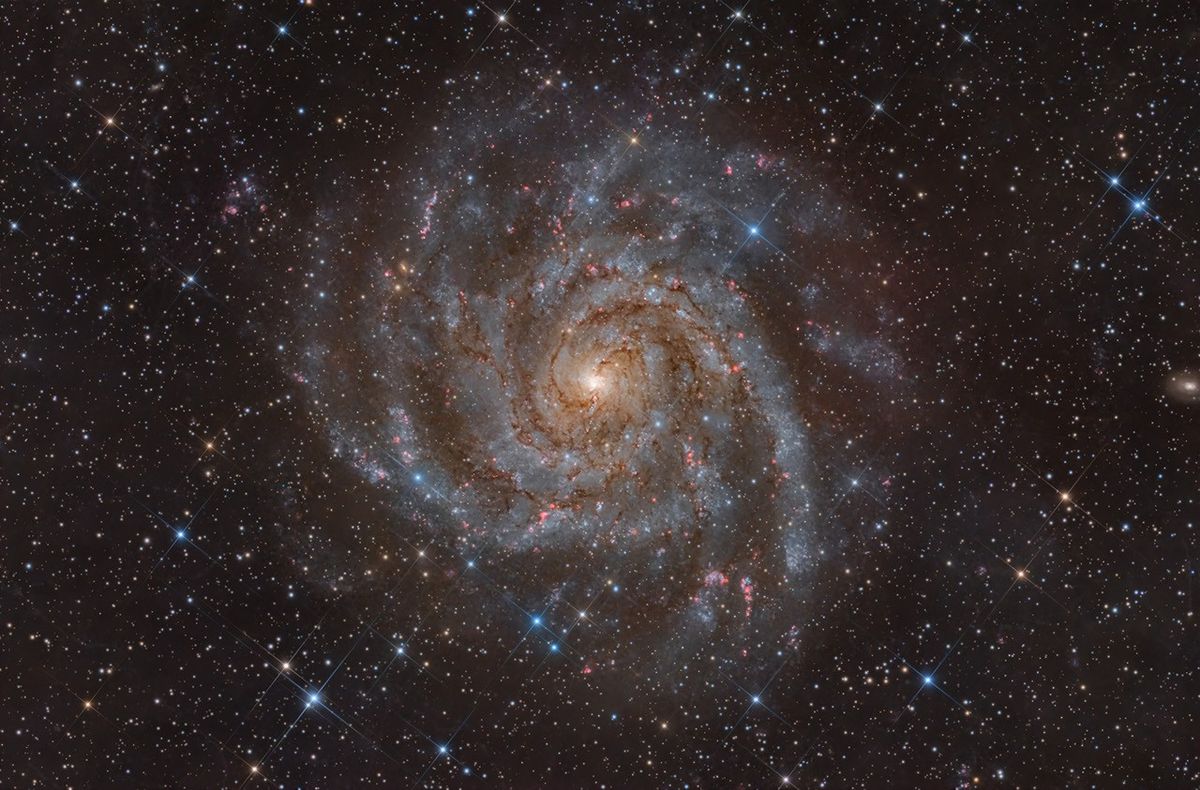
Selected image source ↗ APOD published January 8, 2026. Credit: Gaetan Maxant. A publication-date match, not a photo taken on your date. Independent of NASA.
Read the original APOD for the astronomer’s explanation and full image credits. Its text is preserved in the archive as published.
Similar in size to large, bright spiral galaxies in our neighborhood, IC 342 is a mere 10 million light-years distant toward the long-necked, northern constellation Camelopardalis. A sprawling island universe, IC 342 would otherwise be a prominent galaxy in our night sky, but it is hidden from clear view and only glimpsed through the veil of stars, gas and dust clouds along the plane of our own Milky Way galaxy. Even though IC 342's light is dimmed and reddened by intervening cosmic clouds, this sharp telescopic image traces the galaxy's own obscuring dust, young star clusters, and glowing star forming regions along spiral arms that wind far from the galaxy's core. IC 342 has undergone a recent burst of star formation activity and is close enough to have influenced the evolution of the local group of galaxies and the Milky Way.
Image credit: Gaetan Maxant
Updated · APOD entries through