January 31, 2026
January 31, 2026
A little universe, just for you
Free PNG · 1080 × 1350 · No account needed
Image rights and credit requirements apply when sharing or reusing imagery.
Your celebration date stays the same. Each image keeps its actual publication date.
Selected image source ↗ APOD published January 31, 2026. Full image credits are on the original APOD entry below. A publication-date match, not a photo taken on your date. Independent of NASA.
Read the original APOD for the astronomer’s explanation and full image credits. Its text is preserved in the archive as published.
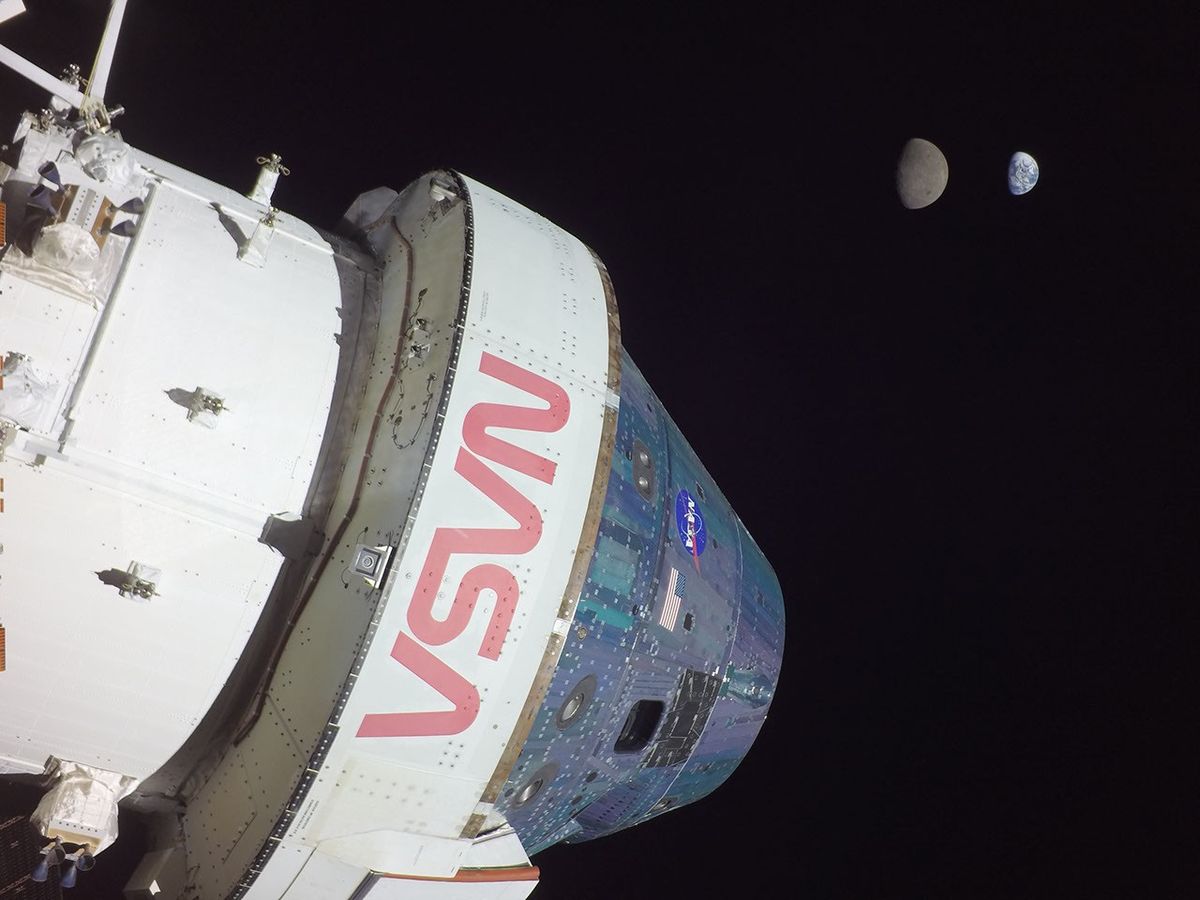
On flight day 13 (November 28, 2022) of the Artemis 1 mission, the Orion spacecraft reached its maximum distance from Earth. At over 430,000 kilometers from Earth, its distant retrograde orbit also puts Orion nearly 70,000 kilometers from the Moon. In the same field of view in this video frame from flight day 13, planet and large natural satellite even appear about the same apparent size from the spacecraft's perspective. On flight day 26 (December 11, 2022), the uncrewed spacecraft splashed down on its home world concluding the historic Artemis I mission. The Artemis II mission, carrying 4 astronauts around the moon and back again, will launch no earlier than February 8.
Updated · APOD entries through