January 29, 2026
January 29, 2026
A little universe, just for you
Free PNG · 1080 × 1350 · No account needed
Image rights and credit requirements apply when sharing or reusing imagery.
Your celebration date stays the same. Each image keeps its actual publication date.
Selected image source ↗ APOD published January 29, 2026. Credit: Mike Selby. A publication-date match, not a photo taken on your date. Independent of NASA.
Read the original APOD for the astronomer’s explanation and full image credits. Its text is preserved in the archive as published.
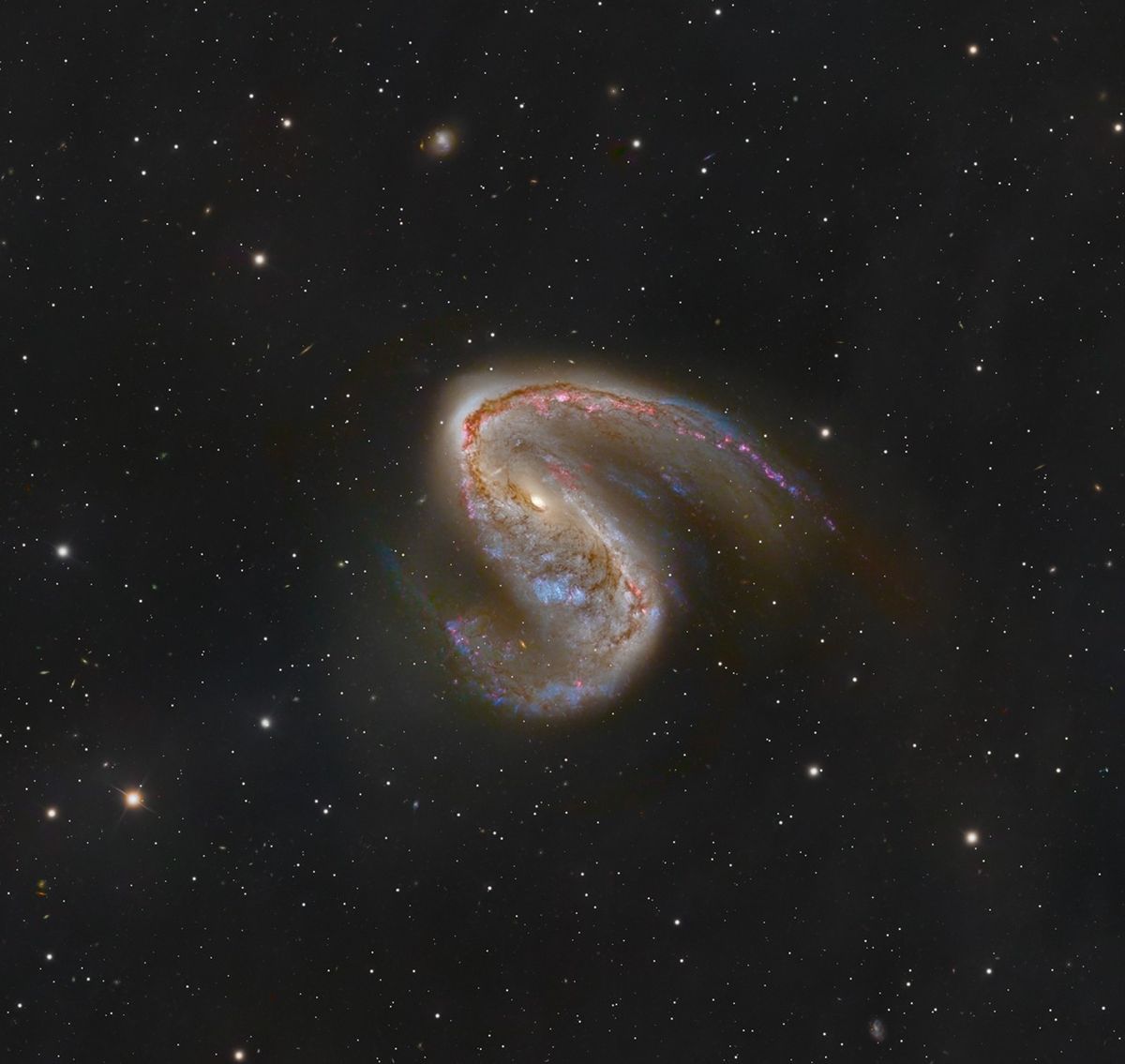
Distorted galaxy NGC 2442 can be found in the southern constellation of the flying fish, (Piscis) Volans. Located about 50 million light-years away, the galaxy's two spiral arms extending from a pronounced central bar give it a hook-shaped appearance in this deep and colorful image, with foreground stars scattered across the telescopic field of view. The image also reveals the distant galaxy's obscuring dust lanes, young blue star clusters and reddish star forming regions surrounding a core of yellowish light from an older population of stars. But the star forming regions seem more concentrated along the drawn-out (upper right) spiral arm. The distorted structure is likely the result of an ancient close encounter with a smaller galaxy that lies off top left of the frame. This telescopic field of view spans over 200,000 light-years at the estimated distance of NGC 2442.
Image credit: Mike Selby
Updated · APOD entries through