January 14, 2026
January 14, 2026
A little universe, just for you
Free PNG · 1080 × 1350 · No account needed
Image rights and credit requirements apply when sharing or reusing imagery.
Your celebration date stays the same. Each image keeps its actual publication date.
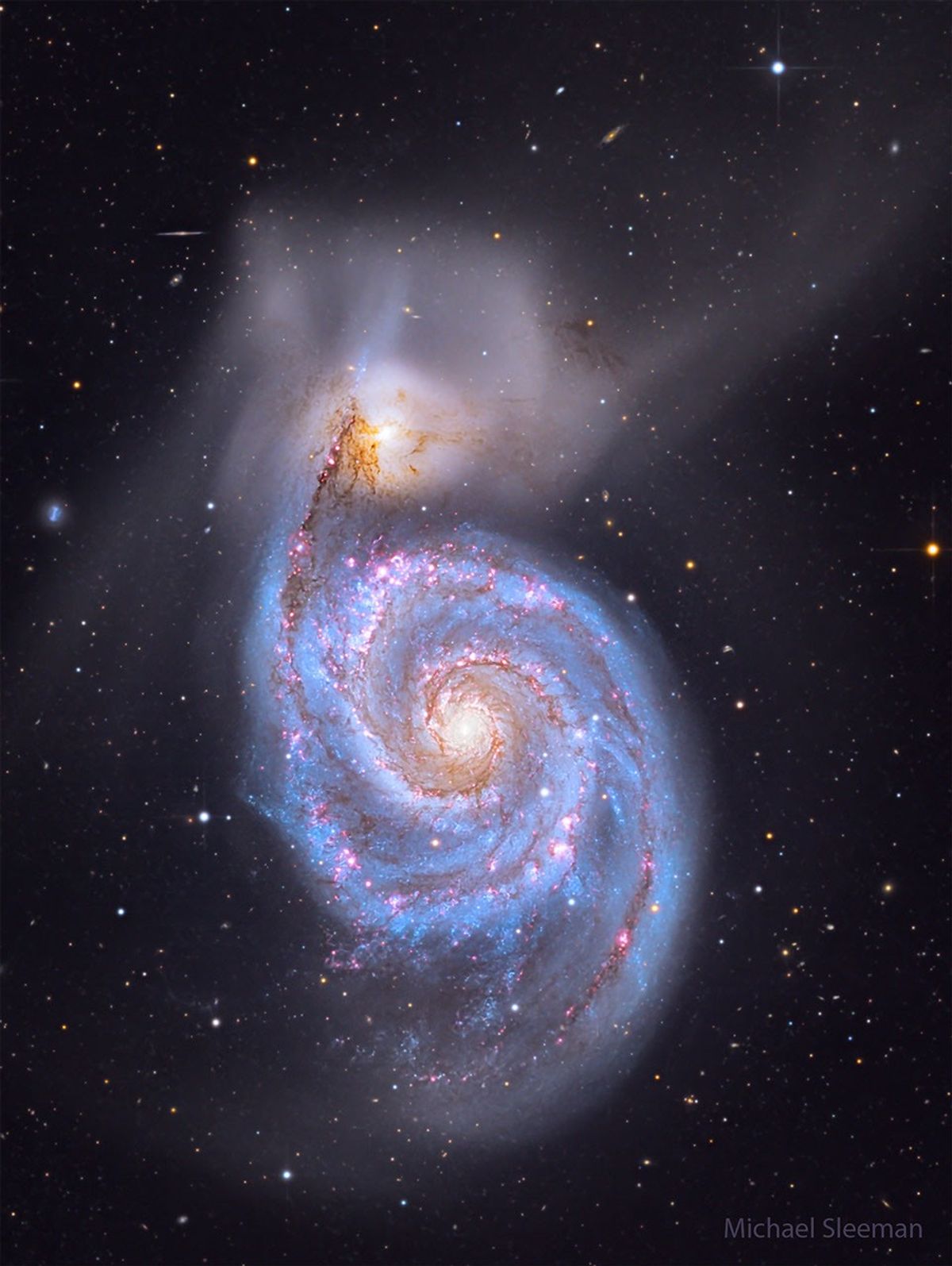
Selected image source ↗ APOD published January 14, 2026. Credit: Michael Sleeman. A publication-date match, not a photo taken on your date. Independent of NASA.
Read the original APOD for the astronomer’s explanation and full image credits. Its text is preserved in the archive as published.
The Whirlpool Galaxy is a classic spiral galaxy. At only 30 million light years distant and fully 60 thousand light years across, M51, also known as NGC 5194, is one of the brightest and most picturesque galaxies on the sky. The featured deep image is a digital combination of images taken in different colors over 58 hours with a telescope from Lijiang, China. Anyone with a good pair of binoculars, however, can see this Whirlpool toward the constellation of the Hunting Dogs (Canes Venatici). M51 is a spiral galaxy of type Sc and is the dominant member of a whole group of galaxies. Astronomers speculate that M51's spiral structure is primarily due to its gravitational interaction with the smaller galaxy just above it.
Image credit: Michael Sleeman
Updated · APOD entries through