February 8, 2026
February 8, 2026
A little universe, just for you
Free PNG · 1080 × 1350 · No account needed
Image rights and credit requirements apply when sharing or reusing imagery.
Your celebration date stays the same. Each image keeps its actual publication date.
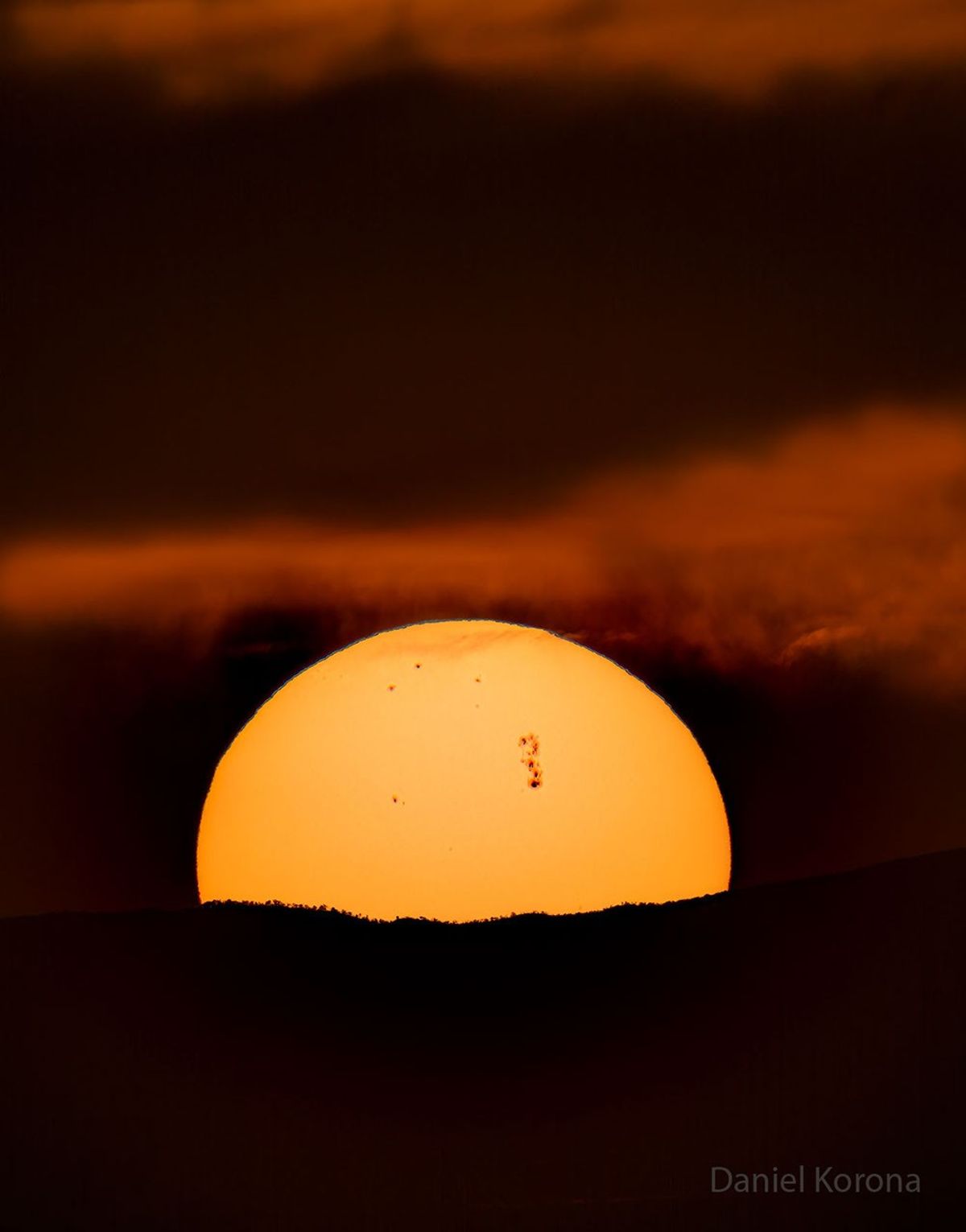
Selected image source ↗ APOD published February 8, 2026. Credit: Daniel Korona. A publication-date match, not a photo taken on your date. Independent of NASA.
Behind the original result
Read the original APOD for the astronomer’s explanation and full image credits. Its text is preserved in the archive as published.
An unusually active sunspot region is now crossing the Sun. The region, labelled AR 4366, is much larger than the Earth and has produced several powerful solar flares over the past ten days. In the featured image, the region is marked by large and dark sunspots toward the upper right of the Sun's disk. The image captured the Sun over a hill in Zacatecas, Mexico, 5 days ago. AR 4366 has become a candidate for the most active solar region in this entire 11-year solar cycle. Active solar regions are frequently associated with increased auroral activity on the Earth. Now reaching the edge, AR 4366 will begin facing away from the Earth during the coming week. It is not known, though, if the active region will survive long enough to reappear in about two weeks' time, as the Sun rotates.
Image credit: Daniel Korona
Updated · APOD entries through