February 24, 2026
February 24, 2026
A little universe, just for you
Free PNG · 1080 × 1350 · No account needed
Image rights and credit requirements apply when sharing or reusing imagery.
Your celebration date stays the same. Each image keeps its actual publication date.
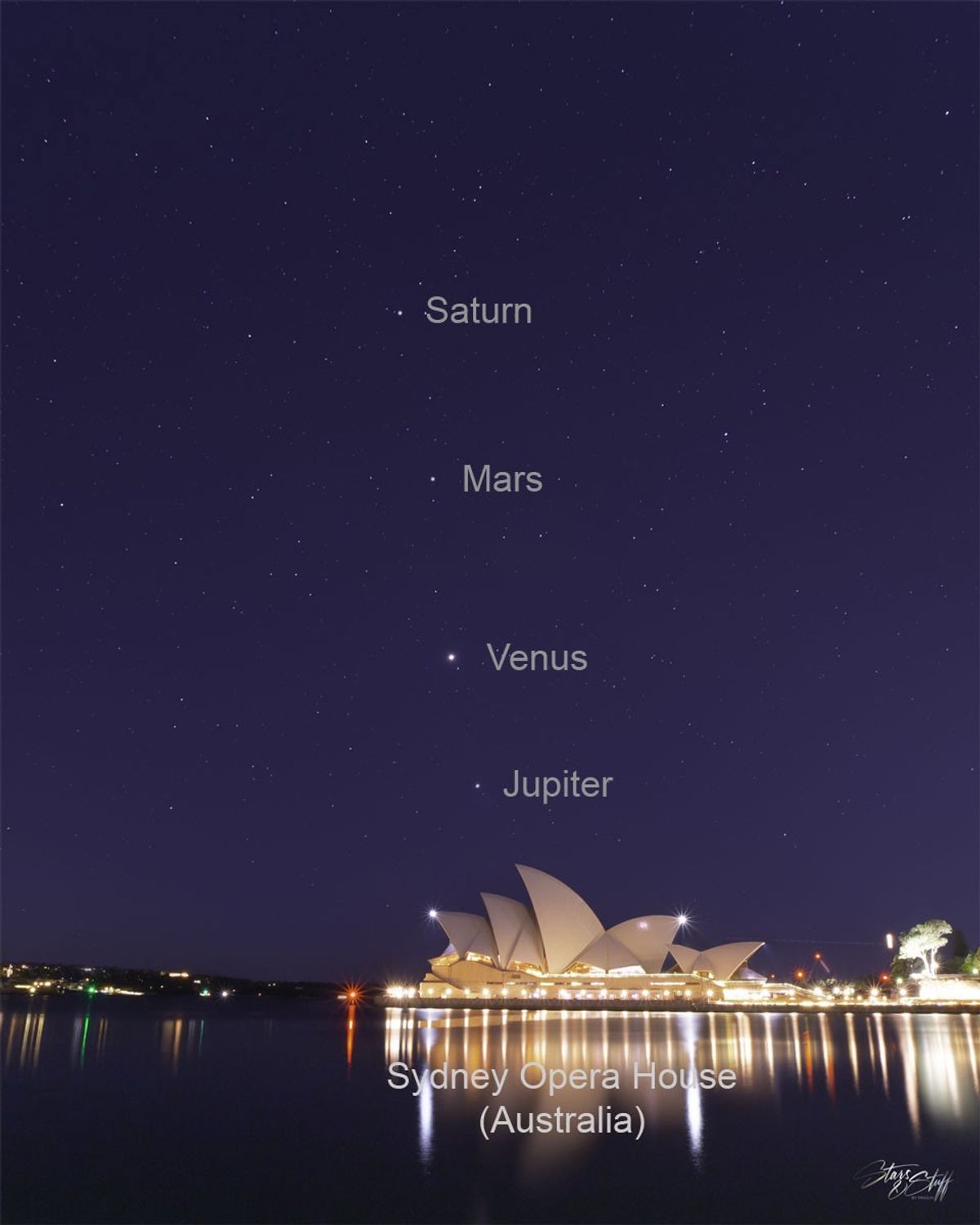
Selected image source ↗ APOD published February 24, 2026. Credit: Prasun Agrawal. A publication-date match, not a photo taken on your date. Independent of NASA.
Read the original APOD for the astronomer’s explanation and full image credits. Its text is preserved in the archive as published.
Look up this week and see a whole bunch of planets. Just after sunset, looking west (mostly), planets Mercury, Venus, Saturn, and Jupiter will all be visible to the unaided eye simultaneously. If you have a telescope, planets Uranus and Neptune can also be seen. In order up from the horizon, the lineup this week will be Venus (the brightest), Mercury, Saturn, Neptune, Uranus, and Jupiter (second brightest). It doesn't matter where on Earth you live because this early evening planet parade will be visible through clear skies all around the globe. The planets will appear to be nearly in a line because they all orbit the Sun in nearly the same plane: the ecliptic. The featured image shows a similar planet parade that occurred in 2022, captured over the Sydney Opera House in southern Australia. Although visible all week, the planets will be most easily seen together this weekend.
Image credit: Prasun Agrawal
Updated · APOD entries through