February 21, 2026
February 21, 2026
A little universe, just for you
Free PNG · 1080 × 1350 · No account needed
Image rights and credit requirements apply when sharing or reusing imagery.
Your celebration date stays the same. Each image keeps its actual publication date.
Selected image source ↗ APOD published February 21, 2026. Credit: Tunc Tezel. A publication-date match, not a photo taken on your date. Independent of NASA.
Read the original APOD for the astronomer’s explanation and full image credits. Its text is preserved in the archive as published.
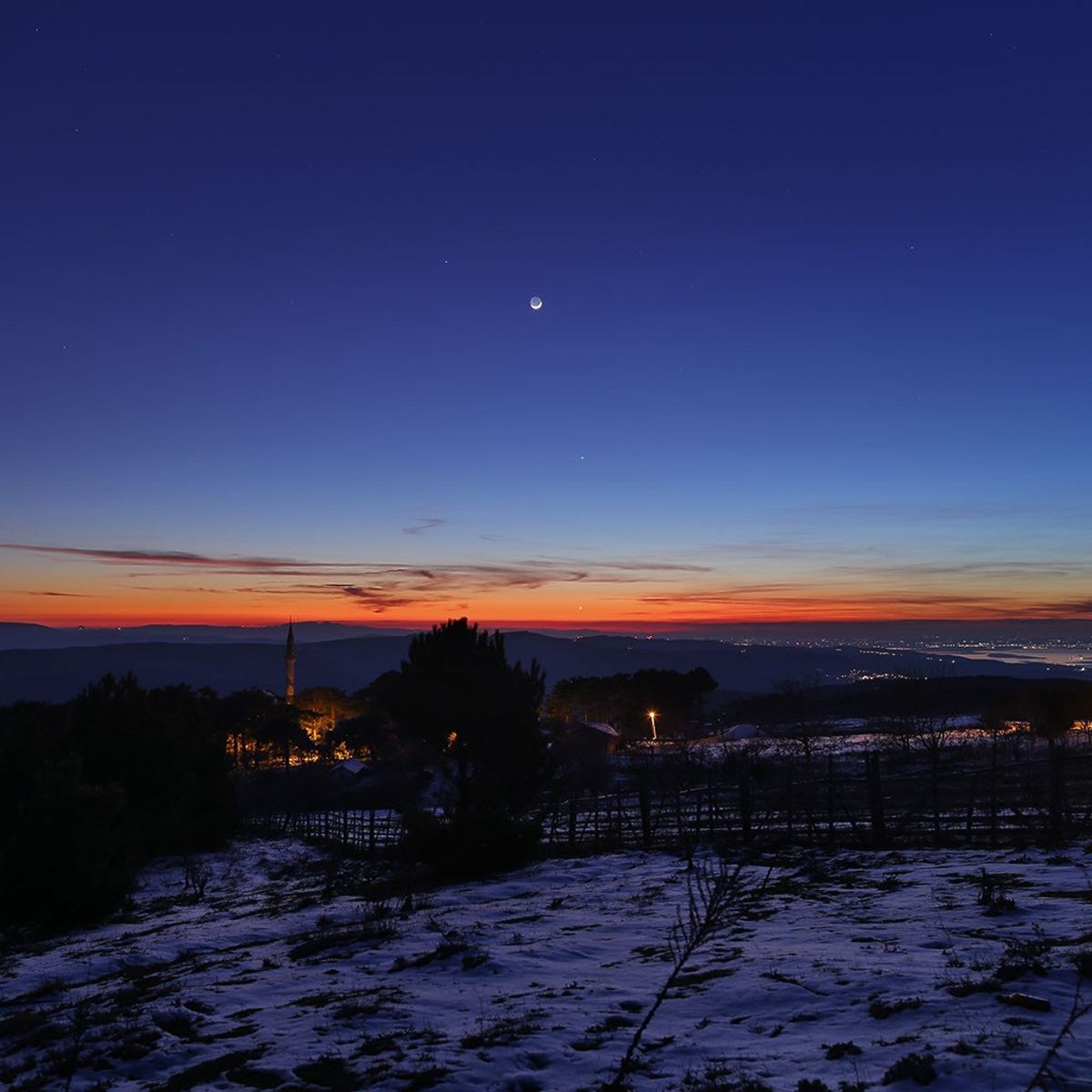
Only two days after the February New Moon's annular eclipse of the Sun, a slender lunar crescent poses near the western horizon in this wintry twilight skyscape. Its nightside faintly illuminated by earthshine, the young Moon is joined by three bright planets in the mostly clear, early evening skies above the village of Kirazli, Turkiye. Inner planet Venus appears closest to the horizon. Near the beginning of its 2026 performance as planet Earth's evening star, brilliant Venus is seen through the warm sunset glare near picture center. Straight above Venus, innermost planet Mercury is easy to spot as it stands remarkably high above the horizon even as the twilight sky is growing dark. Outer planet Saturn, most distant of the naked-eye planets, is found just left of the Moon's sunlit crescent.
Image credit: Tunc Tezel
Updated · APOD entries through