February 1, 2026
February 1, 2026
A little universe, just for you
Free PNG · 1080 × 1350 · No account needed
Image rights and credit requirements apply when sharing or reusing imagery.
Your celebration date stays the same. Each image keeps its actual publication date.
Selected image source ↗ APOD published February 1, 2026. Full image credits are on the original APOD entry below. A publication-date match, not a photo taken on your date. Independent of NASA.
Read the original APOD for the astronomer’s explanation and full image credits. Its text is preserved in the archive as published.
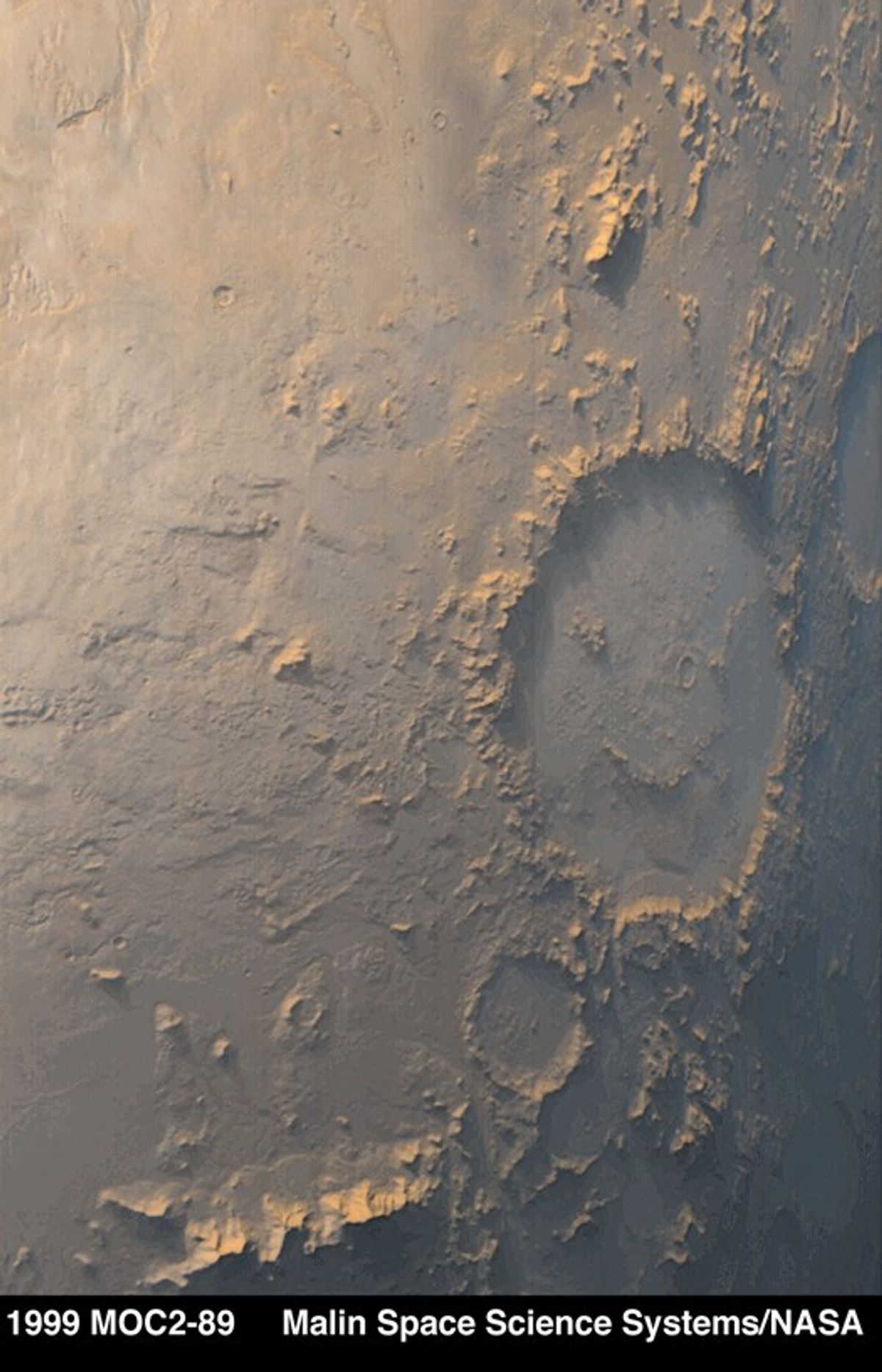
Mars has put on a happy face. The Martian crater Galle is famous because it has internal markings that make it look like a face that is both smiling and winking. These markings were originally discovered in the 1970s in pictures taken by the Viking Orbiter. The Mars Global Surveyor (MGS) spacecraft that orbited Mars from 1996 to 2006 captured the featured picture. Happy Face Crater and its iconic features were formed by chance billions of years ago when a city-sized asteroid slammed into the Martian surface. All rocky planets and moons in our Solar System show impact craters, with the highest number of craters found on Earth's Moon and the planet Mercury. Earth and Venus would show the most, though, were it not for weather and erosion. Sky Surprise: What picture did APOD feature on your birthday? (after 1995)
Updated · APOD entries through