February 13, 2026
February 13, 2026
A little universe, just for you
Free PNG · 1080 × 1350 · No account needed
Image rights and credit requirements apply when sharing or reusing imagery.
Your celebration date stays the same. Each image keeps its actual publication date.
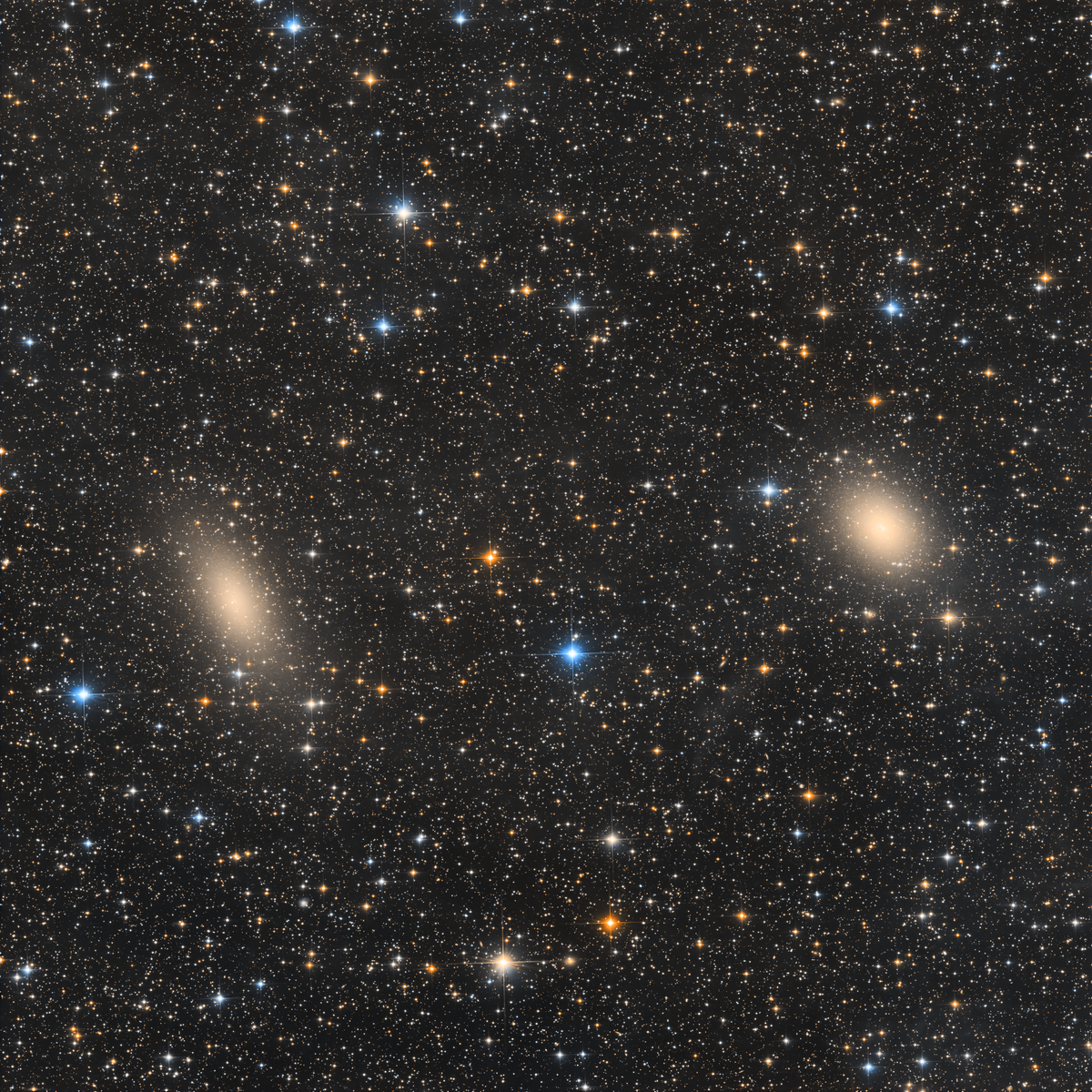
Selected image source ↗ APOD published February 13, 2026. Credit: Chuck Ayoub. A publication-date match, not a photo taken on your date. Independent of NASA.
Read the original APOD for the astronomer’s explanation and full image credits. Its text is preserved in the archive as published.
Dwarf galaxies NGC 147 (left) and NGC 185 stand side by side in this deep telescopic portrait. The two are not-often-imaged satellite galaxies of M31, the great spiral Andromeda Galaxy, some 2.5 million light-years away. Their separation on the sky, less than one degree across a pretty field of view toward the constellation Cassiopeia, translates to only about 35 thousand light-years at Andromeda's distance, but Andromeda itself is found well outside this frame. Brighter and more famous satellite galaxies of Andromeda, M32 and M110, are seen much closer to the great spiral. NGC 147 and NGC 185 have been identified as binary galaxies, forming a gravitationally stable binary system. But recently discovered faint dwarf galaxy Cassiopeia II also seems to be part of their system, forming a gravitationally bound group within Andromeda's intriguing population of small satellite galaxies.
Image credit: Chuck Ayoub
Updated · APOD entries through