December 8, 2025
December 8, 2025
A little universe, just for you
Free PNG · 1080 × 1350 · No account needed
Image rights and credit requirements apply when sharing or reusing imagery.
Your celebration date stays the same. Each image keeps its actual publication date.
Selected image source ↗ APOD published December 8, 2025 · Video still. Full image credits are on the original APOD entry below. A publication-date match, not a photo taken on your date. Independent of NASA.
Read the original APOD for the astronomer’s explanation and full image credits. Its text is preserved in the archive as published.
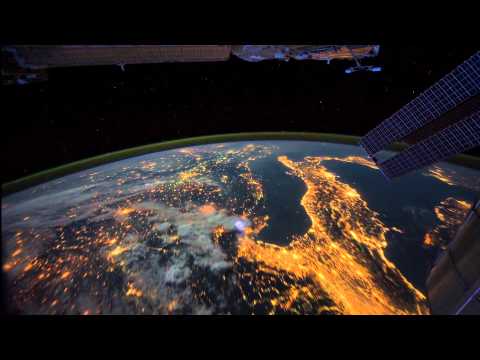
Many wonders are visible when flying over the Earth at night. Such visual spectacles occur every day for astronauts in low Earth orbit, but the featured video captured several from the International Space Station (ISS) in 2011 and set them to rousing music. Passing below are white clouds, orange city lights, lightning flashes in thunderstorms, and dark blue seas. On the horizon is the golden haze of Earth's thin atmosphere, frequently decorated by dancing auroras as the video progresses. The green parts of auroras typically remain below the space station, but the station flies right through the red and purple auroral peaks. Solar panels of the ISS are seen around the frame edges. The ominous wave of approaching brightness at the end of each sequence is just the dawn of the sunlit half of Earth, a dawn that occurs every 90 minutes. Free APOD Lecture in Phoenix: This Wednesday (December 10) at 7 pm
Updated · APOD entries through