December 31, 2025
December 31, 2025
A little universe, just for you
Free PNG · 1080 × 1350 · No account needed
Image rights and credit requirements apply when sharing or reusing imagery.
Your celebration date stays the same. Each image keeps its actual publication date.
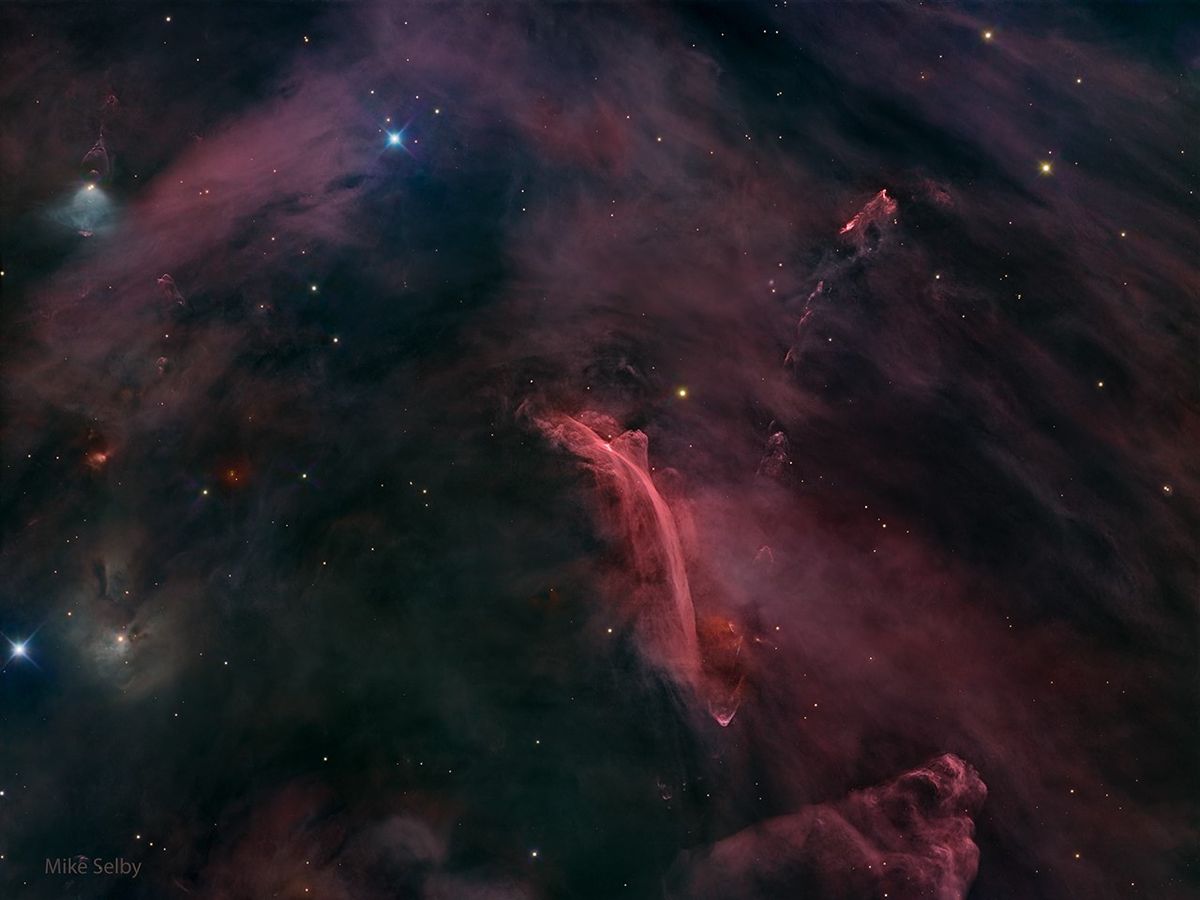
Selected image source ↗ APOD published December 31, 2025. Credit: Mike Selby. A publication-date match, not a photo taken on your date. Independent of NASA.
Read the original APOD for the astronomer’s explanation and full image credits. Its text is preserved in the archive as published.
What created the Waterfall Nebula? The origin is still being researched. The structure, officially designated Herbig-Haro 222, appears in the region of NGC 1999 in the Great Orion Molecular Cloud complex. The elongated gaseous stream stretches about ten light years but appears similar to a long waterfall on Earth. Recent observations indicate that HH-222 is likely a gigantic gaseous bow shock, similar to a wave of water caused by a fast-moving ship. The origin of this shock wave is thought to be a jet outflow from the multiple star system V380 Orionis off the lower left of the frame. Therefore, gas does not flow along the waterfall, but rather the entire structure moves toward the upper right. The Waterfall Nebula lies about 1,500 light years away toward the constellation of Orion. The featured image was captured earlier this month from El Sauce Observatory in Chile. Jigsaw Nebula: Astronomy Puzzle of the Day
Image credit: Mike Selby
Updated · APOD entries through