December 29, 2025
December 29, 2025
A little universe, just for you
Free PNG · 1080 × 1350 · No account needed
Image rights and credit requirements apply when sharing or reusing imagery.
Your celebration date stays the same. Each image keeps its actual publication date.
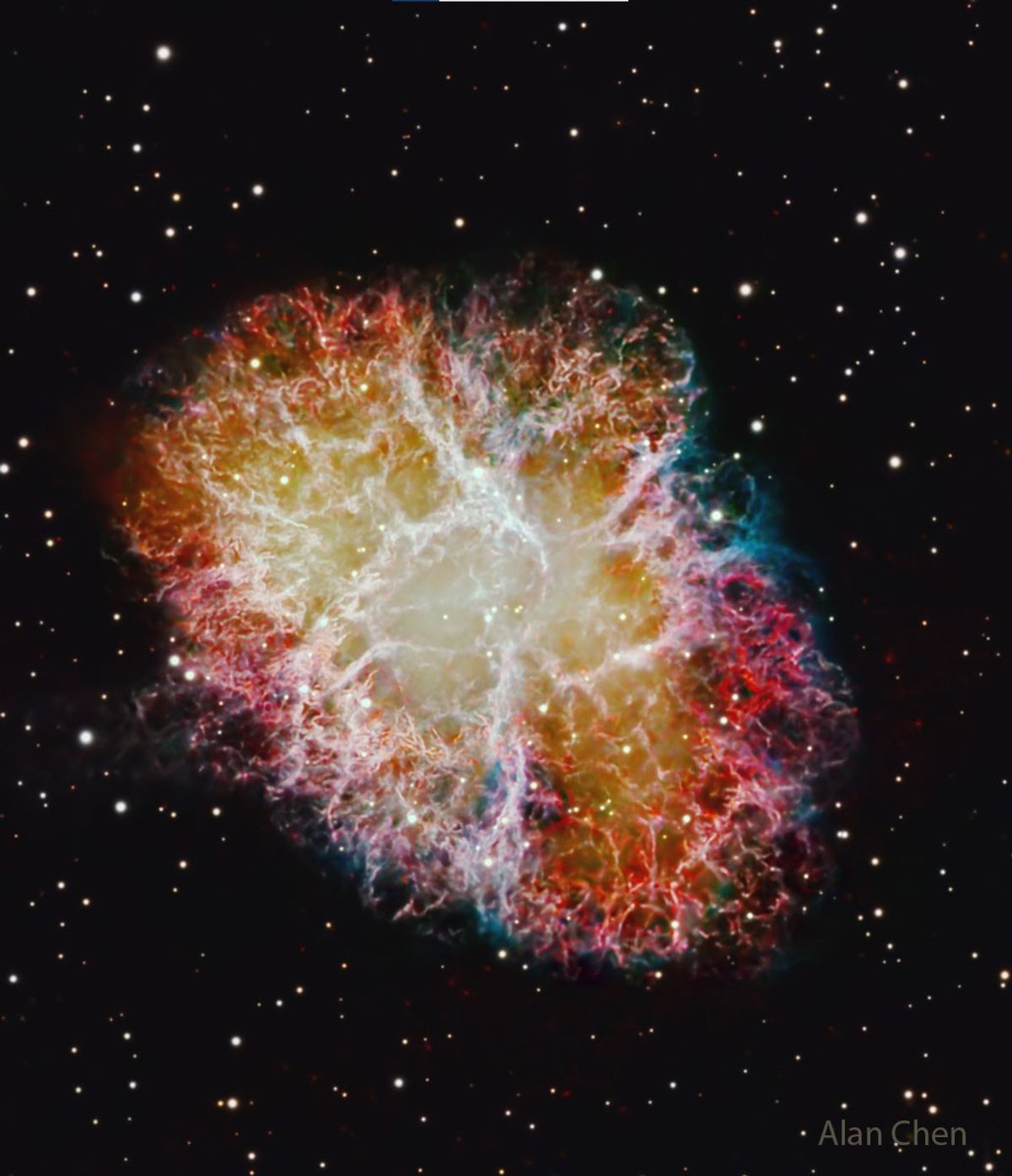
Selected image source ↗ APOD published December 29, 2025. Credit: Alan Chen. A publication-date match, not a photo taken on your date. Independent of NASA.
Read the original APOD for the astronomer’s explanation and full image credits. Its text is preserved in the archive as published.
This is the mess that is left when a star explodes. The Crab Nebula, the result of a supernova seen in 1054 AD, is filled with mysterious filaments. The filaments are not only tremendously complex but appear to have less mass than expelled in the original supernova and a higher speed than expected from a free explosion. The featured image was taken by an amateur astronomer in Leesburg, Florida, USA over three nights last month. It was captured in three primary colors but with extra detail provided by specific emission by hydrogen gas. The Crab Nebula spans about 10 light years. In the Nebula's very center lies a pulsar: a neutron star as massive as the Sun but with only the size of a small town. The Crab Pulsar rotates about 30 times each second. Explore the Universe: Random APOD Generator
Image credit: Alan Chen
Updated · APOD entries through