December 28, 2025
December 28, 2025
A little universe, just for you
Free PNG · 1080 × 1350 · No account needed
Image rights and credit requirements apply when sharing or reusing imagery.
Your celebration date stays the same. Each image keeps its actual publication date.
Selected image source ↗ APOD published December 28, 2025. Full image credits are on the original APOD entry below. A publication-date match, not a photo taken on your date. Independent of NASA.
Behind the original result
Read the original APOD for the astronomer’s explanation and full image credits. Its text is preserved in the archive as published.
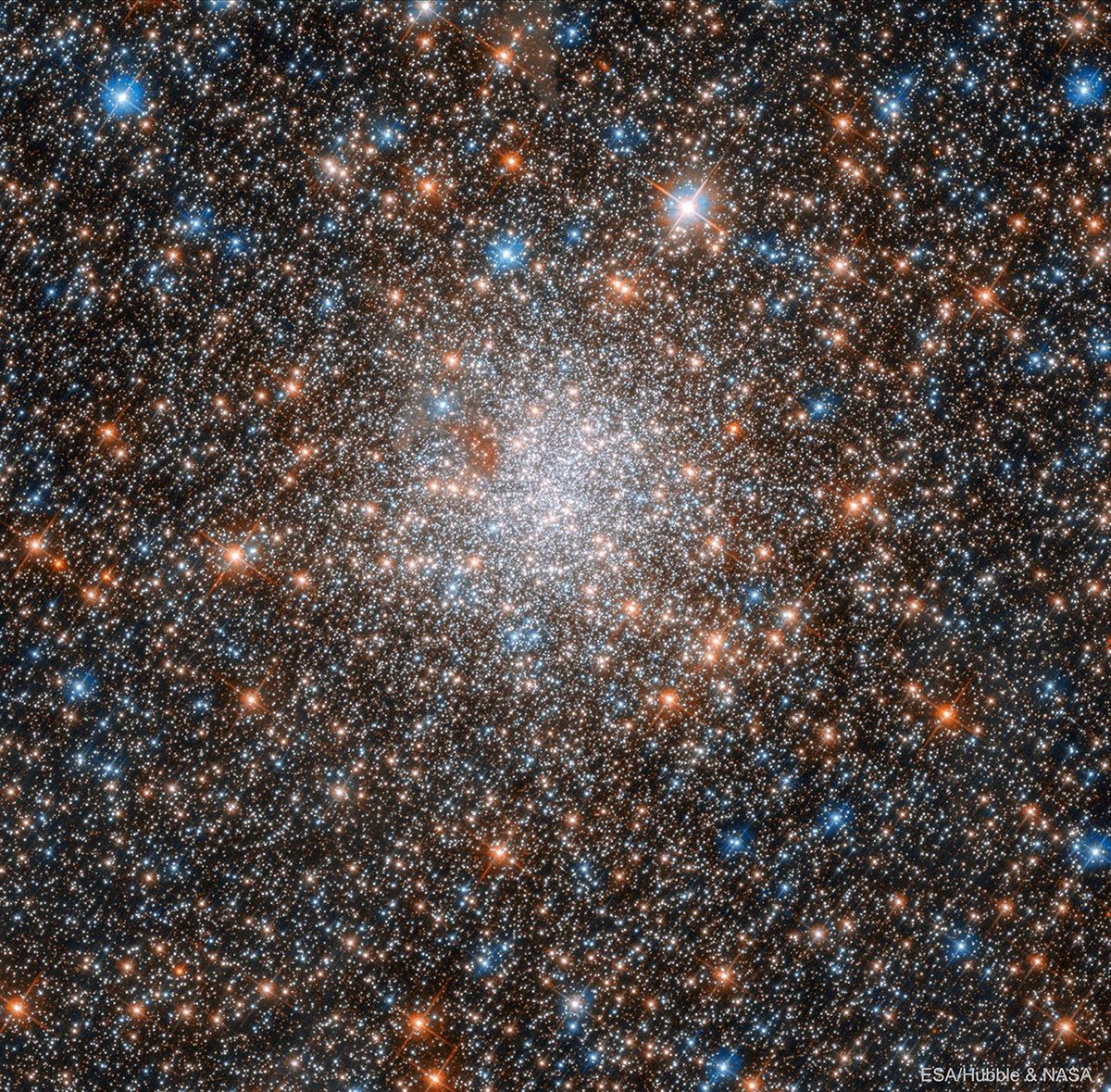
Jewels don't shine this bright -- only stars do. And almost every spot in this jewel-box of an image from the Hubble Space Telescope is a star. Now, some stars are more red than our Sun, and some more blue -- but all of them are much farther away. Although it takes light about 8 minutes to reach Earth from the Sun, NGC 1898 is so far away that it takes light about 160,000 years to get here. This huge ball of stars, NGC 1898, is called a globular cluster and resides in the central bar of the Large Magellanic Cloud (LMC) -- a satellite galaxy of our Milky Way Galaxy. The featured multi-colored image includes light from the infrared to the ultraviolet and was taken to help determine if the stars of NGC 1898 all formed at the same time or at different times. There are increasing indications that most globular clusters formed stars in stages, and that, in particular, stars from NGC 1898 formed shortly after ancient encounters with the Small Magellanic Cloud (SMC) and our Milky Way Galaxy. Space Telescopes Live: Where are Hubble and Webb looking right now?
Updated · APOD entries through