December 23, 2025
December 23, 2025
A little universe, just for you
Free PNG · 1080 × 1350 · No account needed
Image rights and credit requirements apply when sharing or reusing imagery.
Your celebration date stays the same. Each image keeps its actual publication date.
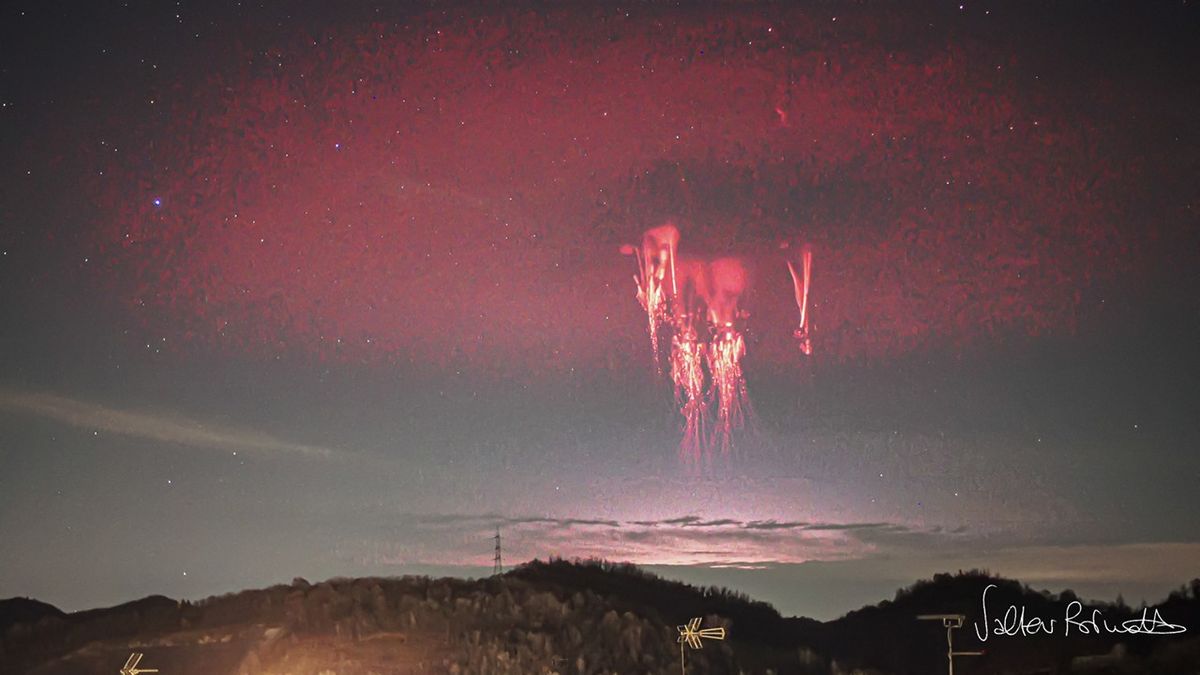
Selected image source ↗ APOD published December 23, 2025. Credit: Valter Binotto. A publication-date match, not a photo taken on your date. Independent of NASA.
Behind the original result
Read the original APOD for the astronomer’s explanation and full image credits. Its text is preserved in the archive as published.
What's happening in the sky? Lightning. The most commonly seen type of lightning involves flashes of bright white light between clouds. Over the past 50 years, though, other types of upper-atmospheric lightning have been confirmed, including tentacled red sprites and ringed ELVES. Although both last only a small fraction of a second, sprites are brighter and easier to photograph than their more common electrical-discharge cousins. ELVES are rapidly expanding rings that are thought to be created when an electromagnetic pulse shoots upward from charged clouds and impacts the ionosphere, causing nitrogen molecules to glow. Capturing either form of lightning takes patience and experience -- capturing them both together, since they usually occur separately, is rare. The featured image is a frame from a video recorded from Possagno, Italy late last month above a distant thunderstorm over the Adriatic Sea.
Image credit: Valter Binotto
Updated · APOD entries through