December 19, 2025
December 19, 2025
A little universe, just for you
Free PNG · 1080 × 1350 · No account needed
Image rights and credit requirements apply when sharing or reusing imagery.
Your celebration date stays the same. Each image keeps its actual publication date.
Selected image source ↗ APOD published December 19, 2025. Credit: When the Moon. A publication-date match, not a photo taken on your date. Independent of NASA.
Read the original APOD for the astronomer’s explanation and full image credits. Its text is preserved in the archive as published.
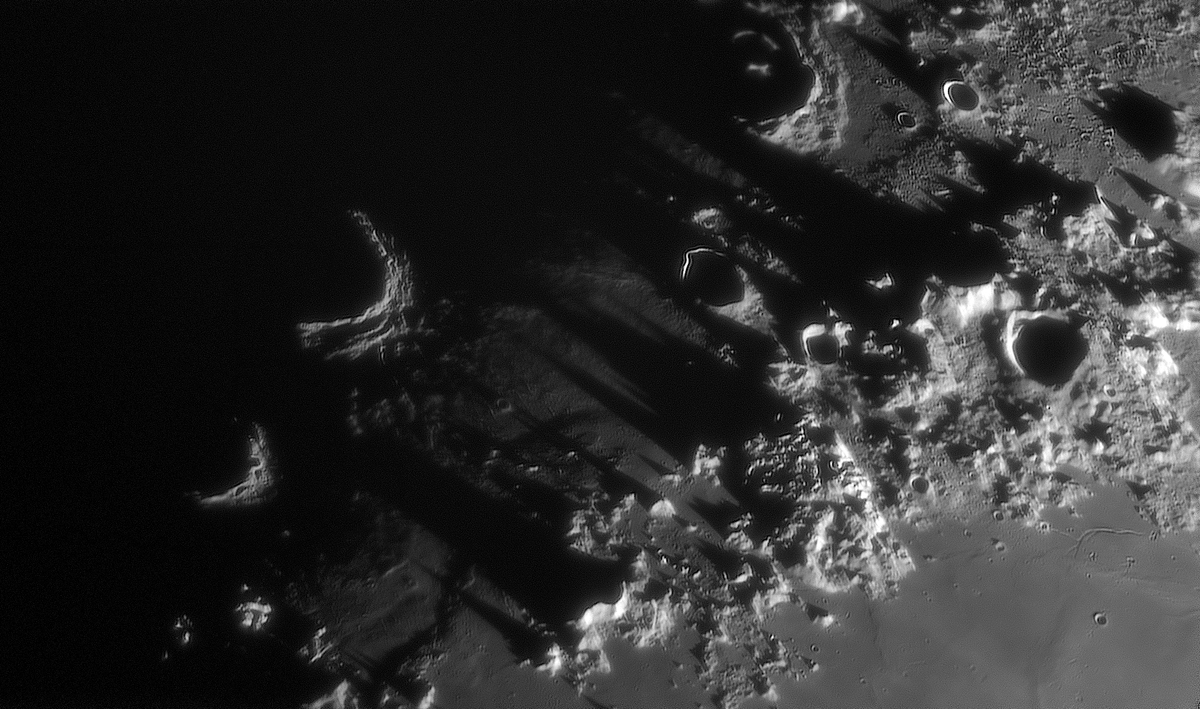
When the Moon is at its first quarter phase, the Sun rises along the Montes Caucasus as seen from the lunar surface. The lunar mountain range casts the magnificent, spire-like shadows in this telescopic view from planet Earth, looking along the lunar terminator or the boundary between lunar night and day. Named for Earth's own Caucasus Mountains, the rugged lunar Montes Caucasus peaks, up to 6 kilometers high, are located between the smooth Mare Imbrium to the west and Mare Serenitatis to the east. Still mostly in shadow in this first quarter lunarscape, at the left (west) impact craters reflect the light of the rising Sun along their outer, eastern crater walls.
Image credit: When the Moon
Updated · APOD entries through