December 10, 2025
December 10, 2025
A little universe, just for you
Free PNG · 1080 × 1350 · No account needed
Image rights and credit requirements apply when sharing or reusing imagery.
Your celebration date stays the same. Each image keeps its actual publication date.
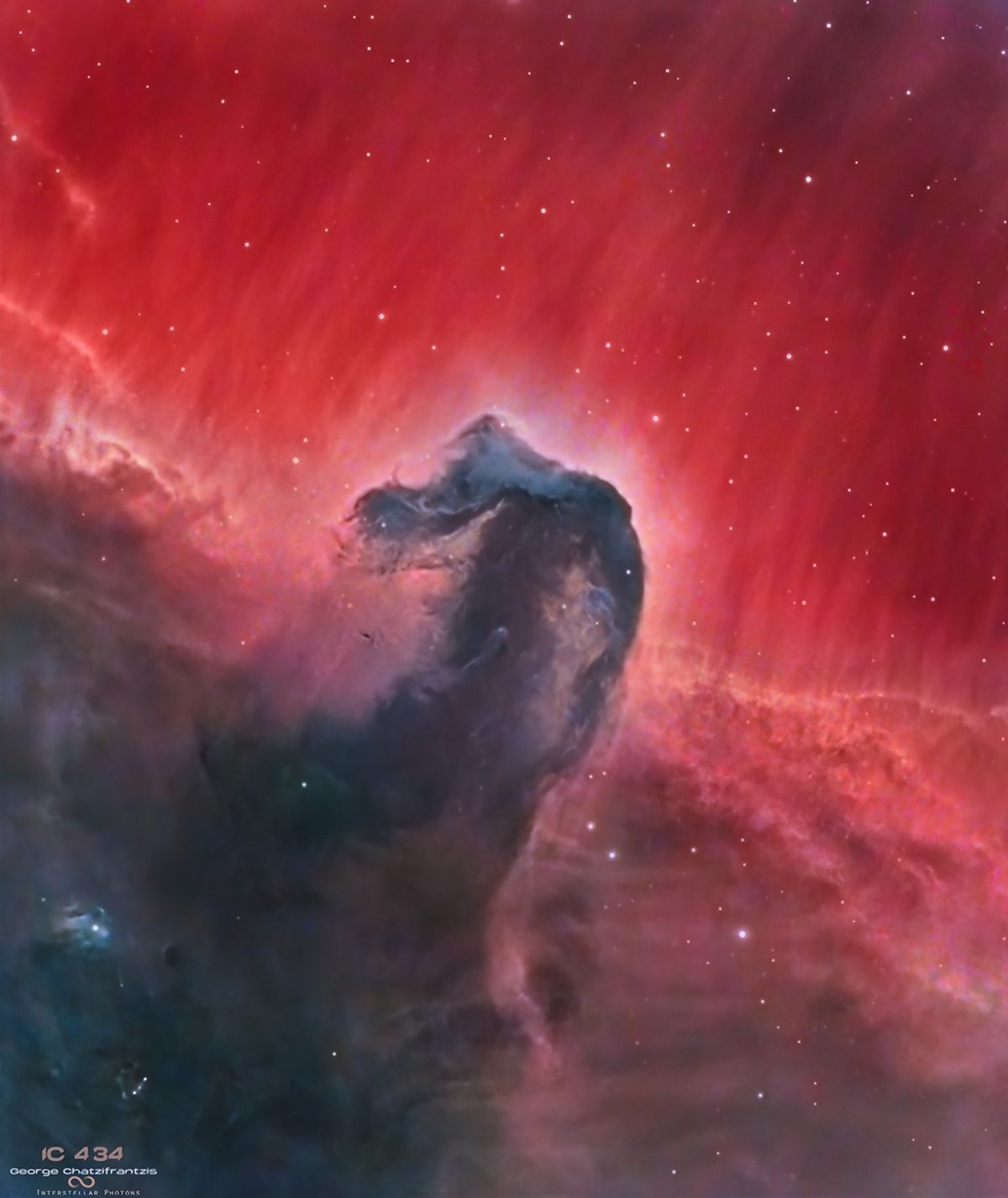
Selected image source ↗ APOD published December 10, 2025. Credit: George Chatzifrantzis. A publication-date match, not a photo taken on your date. Independent of NASA.
Read the original APOD for the astronomer’s explanation and full image credits. Its text is preserved in the archive as published.
Sculpted by stellar winds and radiation, this dusty interstellar molecular cloud has by chance assumed an immediately recognizable shape. Fittingly known as The Horsehead Nebula, it lies some 1,500 light-years distant, embedded in the vast Orion cloud complex. About five light-years "tall," the dark cloud is cataloged as Barnard 33, first identified on a photographic plate taken in the early 20th century. B33 is visible primarily because its obscuring dust is silhouetted against the glow of emission nebula IC 434. Hubble Space Telescope images from the early 21st century find young stars forming within B33. Of course, the magnificent interstellar cloud will slowly shift its apparent shape over the next few million years. But for now the Horsehead Nebula is a rewarding though difficult object to view with small telescopes from planet Earth.
Image credit: George Chatzifrantzis
Updated · APOD entries through