August 10, 2026
August 10, 2026
A little universe, just for you
Free PNG · 1080 × 1350 · No account needed
Image rights and credit requirements apply when sharing or reusing imagery.
Your celebration date stays the same. Each image keeps its actual publication date.
Selected image source ↗ APOD published August 10, 2026. Credit: Rafael Sampaio. A publication-date match, not a photo taken on your date. Independent of NASA.
Read the original APOD for the astronomer’s explanation and full image credits. Its text is preserved in the archive as published.
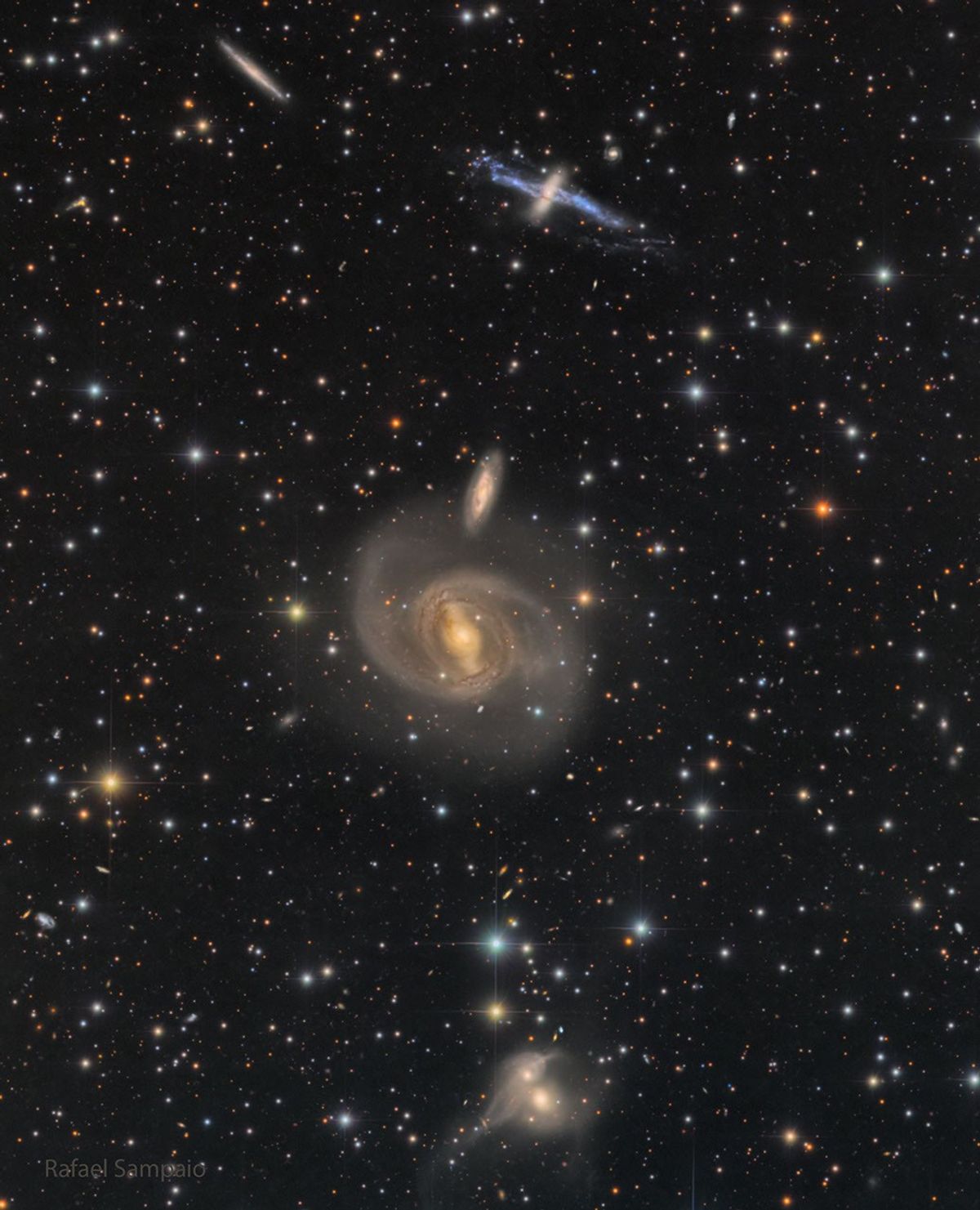
ch of these pairs of galaxies is different. The two galaxies at the top are likely not interacting, at least presently. However, the top galaxy with the blue stripe, NGC 4650A, is a polar ring galaxy and may be the result of a past galaxy collision. The two galaxies in the middle of the featured image appear like they could be interacting gravitationally -- but their relative speeds make this unlikely. Of these two, the larger galaxy, NGC 4650, is a spiral galaxy with a bright bar of stars across its center. The two galaxies at the bottom are actively interacting. Possibly in a billion years or so, NGC 4622A and NGC 4622B will merge and become one single galaxy. All of these galaxies are likely members of the larger Centaurus Galaxy Cluster. Explore the Universe: Random APOD Generator
Image credit: Rafael Sampaio
Updated · APOD entries through