April 2, 2026
April 2, 2026
A little universe, just for you
Free PNG · 1080 × 1350 · No account needed
Image rights and credit requirements apply when sharing or reusing imagery.
Your celebration date stays the same. Each image keeps its actual publication date.
Selected image source ↗ APOD published April 2, 2026. Credit: NASA/Bill Ingalls; Text: Ogetay Kayali (MTU). A publication-date match, not a photo taken on your date. Independent of NASA.
Read the original APOD for the astronomer’s explanation and full image credits. Its text is preserved in the archive as published.
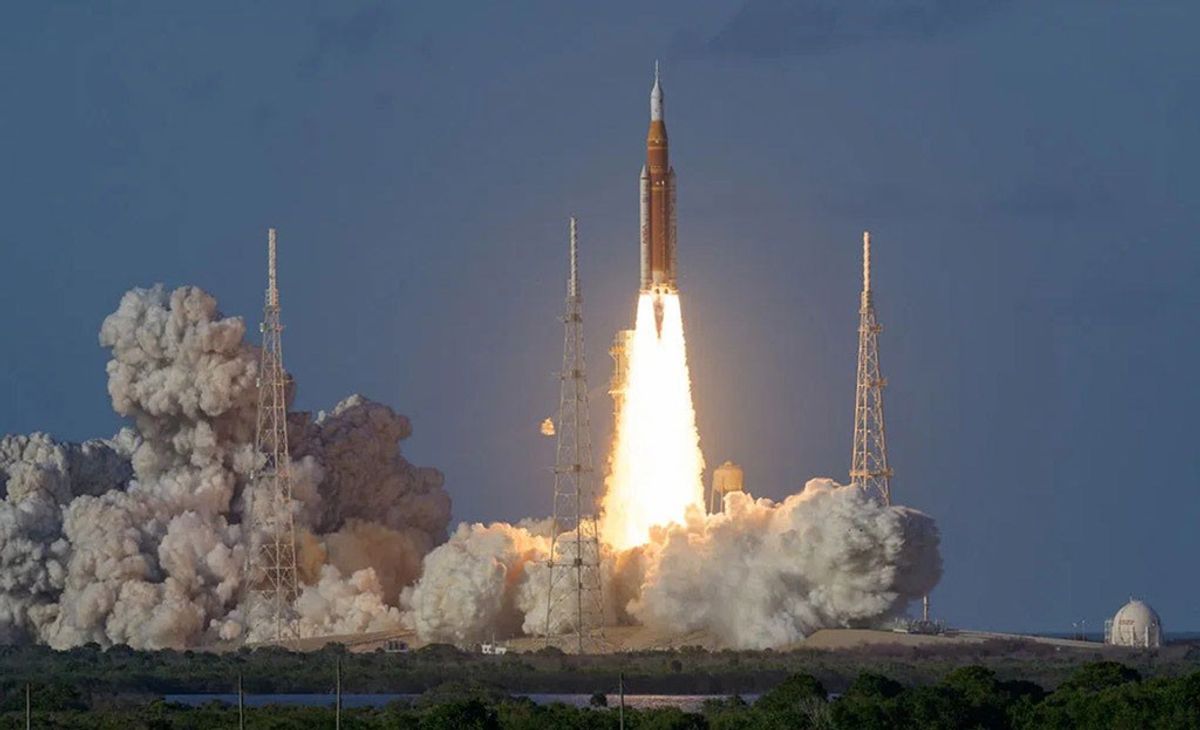
We are one small step closer to returning to the Moon. A new chapter in human exploration began yesterday when NASA's Artemis II launched aboard the Space Launch System (SLS) from Kennedy Space Center. Carrying four astronauts, the Orion spacecraft's planned lunar flyby will be the first in over half a century. This historic test flight, echoing the legacy of Apollo while pushing beyond it, will carry its crew farther from Earth than any humans since 1972, looping around the Moon before returning home. During the approximately ten-day journey, Orion's systems--from life support to navigation--will be tested in deep space, while astronauts observe the lunar surface, including shadowed regions of the far side rarely seen with such perspective. After looping around the Moon, the astronauts will return to Earth, ending their journey with a Pacific Ocean splashdown.
Image credit: NASA/Bill Ingalls; Text: Ogetay Kayali (MTU)
Updated · APOD entries through