April 27, 2026
April 27, 2026
A little universe, just for you
Free PNG · 1080 × 1350 · No account needed
Image rights and credit requirements apply when sharing or reusing imagery.
Your celebration date stays the same. Each image keeps its actual publication date.
Selected image source ↗ APOD published April 27, 2026. Credit: Uli Fehr. A publication-date match, not a photo taken on your date. Independent of NASA.
Behind the original result
Read the original APOD for the astronomer’s explanation and full image credits. Its text is preserved in the archive as published.
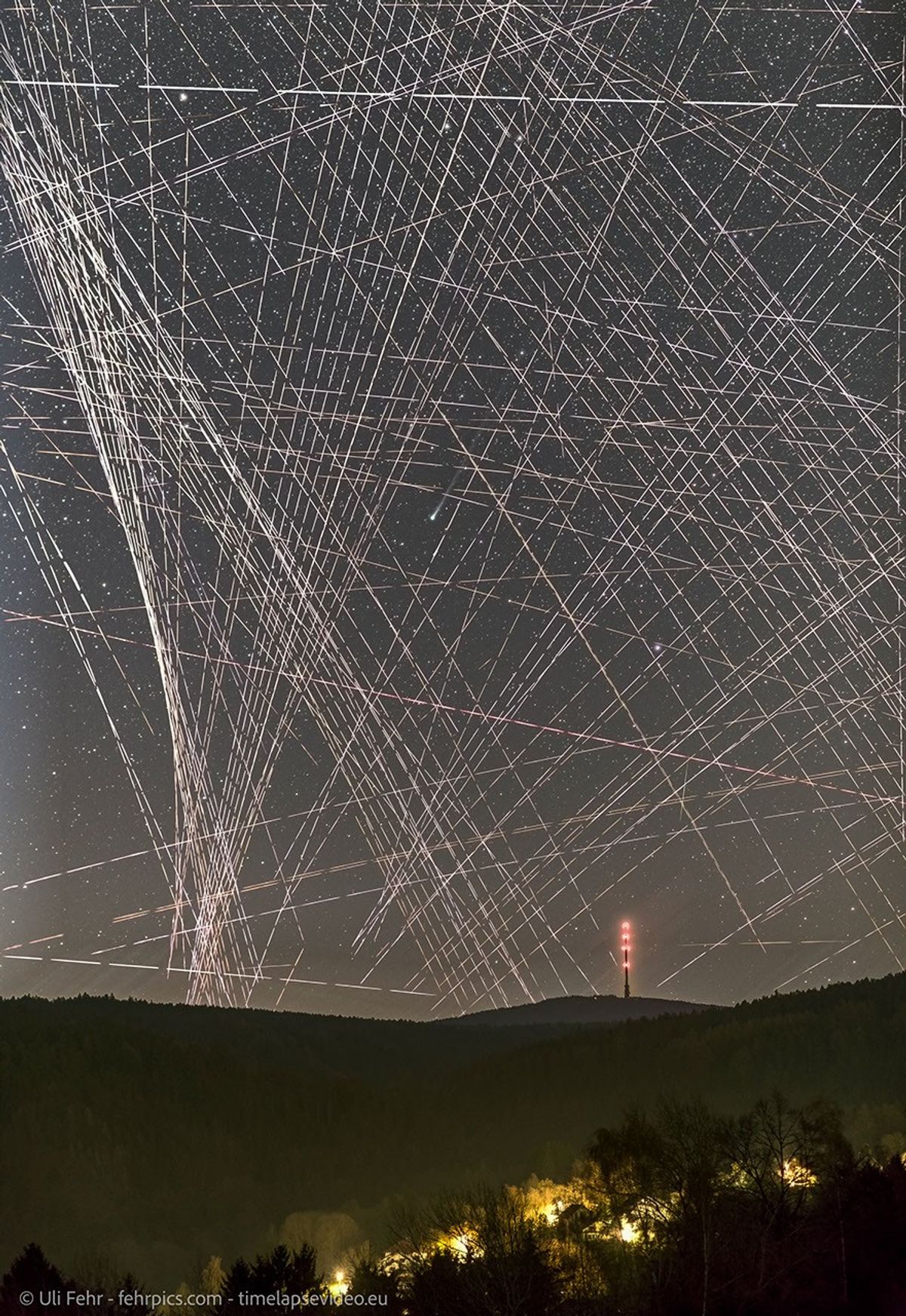
Can you find the comet? Somewhere through this web of satellite trails is Comet C/2025 R3 (PanSTARRS), a bright visitor passing through the inner Solar System. Now, the orbiting satellites themselves only appear as streaks because of the long camera exposure, over 10 minutes in this case. On the contrary, to the eye, satellites appear as points that drift slowly across the night sky and shine by reflecting sunlight -- primarily just after sunset and before sunrise. The featured image was taken just before sunrise two weeks ago from Bavaria, Germany. Presently, Comet R3 PanSTARRS is hard to see for even another reason -- because it is so (angularly) close to the Sun. As the comet rounds the Sun, it will be best seen in coming weeks from southern hemispheree skies, although then it will be heading out to interstellar space and fading. If you haven't yet found the comet, don't despair; please take a closer look just above the image center.
Image credit: Uli Fehr
Updated · APOD entries through