April 25, 2026
April 25, 2026
A little universe, just for you
Free PNG · 1080 × 1350 · No account needed
Image rights and credit requirements apply when sharing or reusing imagery.
Your celebration date stays the same. Each image keeps its actual publication date.
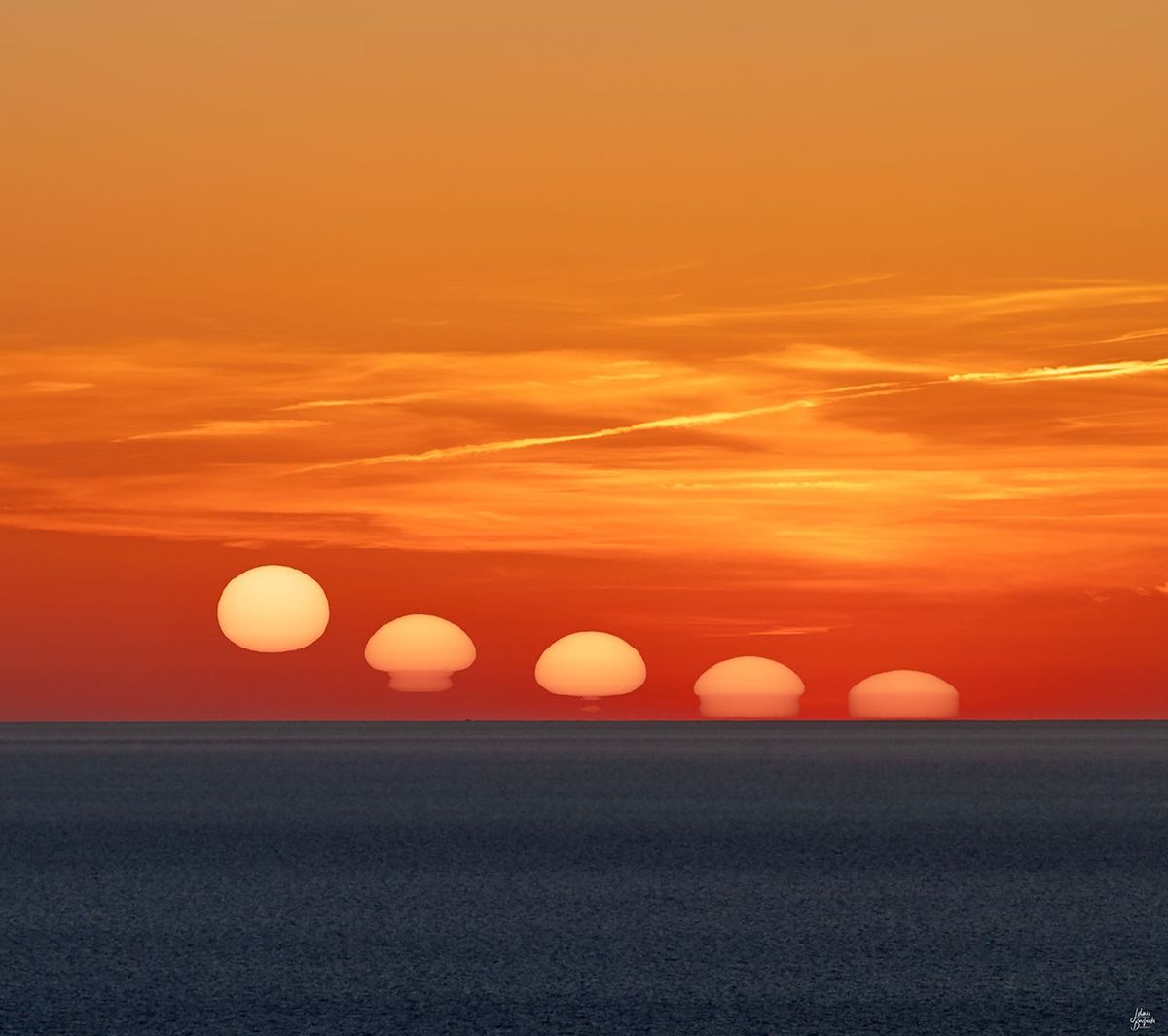
Selected image source ↗ APOD published April 25, 2026. Credit: Lorenzo Busilacchi. A publication-date match, not a photo taken on your date. Independent of NASA.
Read the original APOD for the astronomer’s explanation and full image credits. Its text is preserved in the archive as published.
This seaside sunset offered a surreal experience, captured in a sea and skyscape from the west coast of Sardinia, Italy, planet Earth. The Daliesque scene is a composition of sequential exposures made with a camera and long telephoto lens. The Sun is not melting, though. Its shifting and fluid appearance as it nears the horizon is caused as refraction along the line of sight changes and creates distorted images or mirages of the reddened solar disk. The changes in atmospheric refraction correspond to atmospheric layers with sharply different temperatures and densities. Another famous but fleeting effect of atmospheric refraction produced by a long sight-line to the setting (or rising) Sun is often called the green flash.
Image credit: Lorenzo Busilacchi
Updated · APOD entries through