April 22, 2026
April 22, 2026
A little universe, just for you
Free PNG · 1080 × 1350 · No account needed
Image rights and credit requirements apply when sharing or reusing imagery.
Your celebration date stays the same. Each image keeps its actual publication date.
Selected image source ↗ APOD published April 22, 2026 · Video still. Full image credits are on the original APOD entry below. A publication-date match, not a photo taken on your date. Independent of NASA.
Read the original APOD for the astronomer’s explanation and full image credits. Its text is preserved in the archive as published.
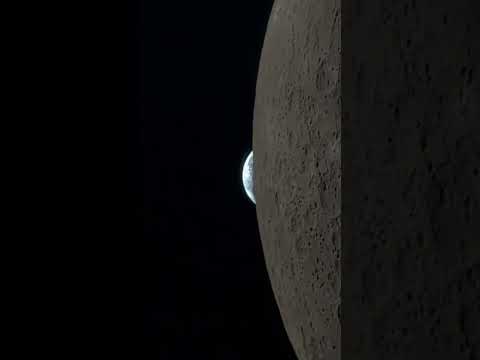
What does it mean for the Earth to set? Artemis II Commander Reid Wiseman gave us another spectacular view of Earth from their historic flyby of the Moon. Commander Wiseman's video, taken with an iPhone at 8x zoom, shows our entire planet gradually blocked from view by the Moon. On the Earth, the 24-hour planetary rotation causes the Sun to set below your horizon every night. However, on Artemis II the Earthset was caused not by the Moon’s rotation but by the spacecraft moving behind the Moon (at about 55 seconds in this video). Once rare, views of Earth are now taken many times a day from many spacecraft, including NASA’s SWOT (Surface Water and Ocean Topography) satellite tracking freshwater resources and USGS Landsat 8 and 9 satellites supporting water management for farmers, for example. Space agencies around our home planet now work together to provide unique and ever-improving views of our Earth. Celebrate: Earth Day
Updated · APOD entries through