April 19, 2026
April 19, 2026
A little universe, just for you
Free PNG · 1080 × 1350 · No account needed
Image rights and credit requirements apply when sharing or reusing imagery.
Your celebration date stays the same. Each image keeps its actual publication date.
Selected image source ↗ APOD published April 19, 2026. Credit: Miguel Claro (TWAN, Dark Sky Alqueva). A publication-date match, not a photo taken on your date. Independent of NASA.
Read the original APOD for the astronomer’s explanation and full image credits. Its text is preserved in the archive as published.
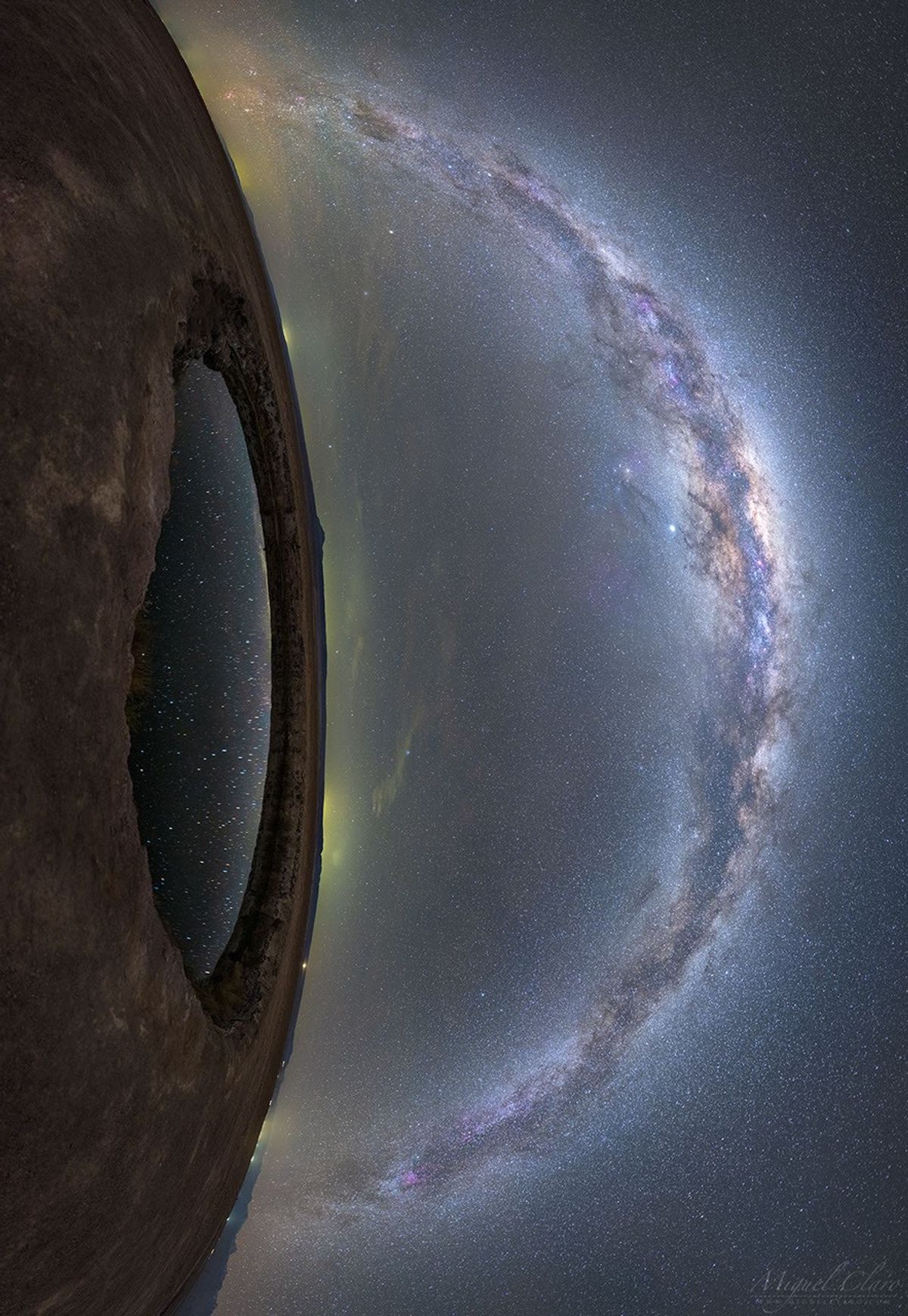
Have you ever had stars in your eyes? It appears that the eye on the left does, and moreover, it appears to be gazing at even more stars. The featured 27-frame mosaic was taken in 2019 from Ojas de Salar in the Atacama Desert of Chile. The eye is actually a small lagoon captured reflecting the dark night sky as the Milky Way Galaxy arched overhead. The seemingly smooth band of the Milky Way is really composed of billions of stars, but decorated with filaments of light-absorbing dust and red-glowing nebulas. Additionally, both Jupiter (slightly left the galactic arch) and Saturn (slightly to the right) are visible. The lights of small towns dot the unusual vertical horizon. The rocky terrain around the lagoon appears to some more like the surface of Mars than our Earth. Sky Surprise: What picture did APOD feature on your birthday? (after 1995)
Image credit: Miguel Claro (TWAN, Dark Sky Alqueva)
Updated · APOD entries through