April 16, 2026
April 16, 2026
A little universe, just for you
Free PNG · 1080 × 1350 · No account needed
Image rights and credit requirements apply when sharing or reusing imagery.
Your celebration date stays the same. Each image keeps its actual publication date.
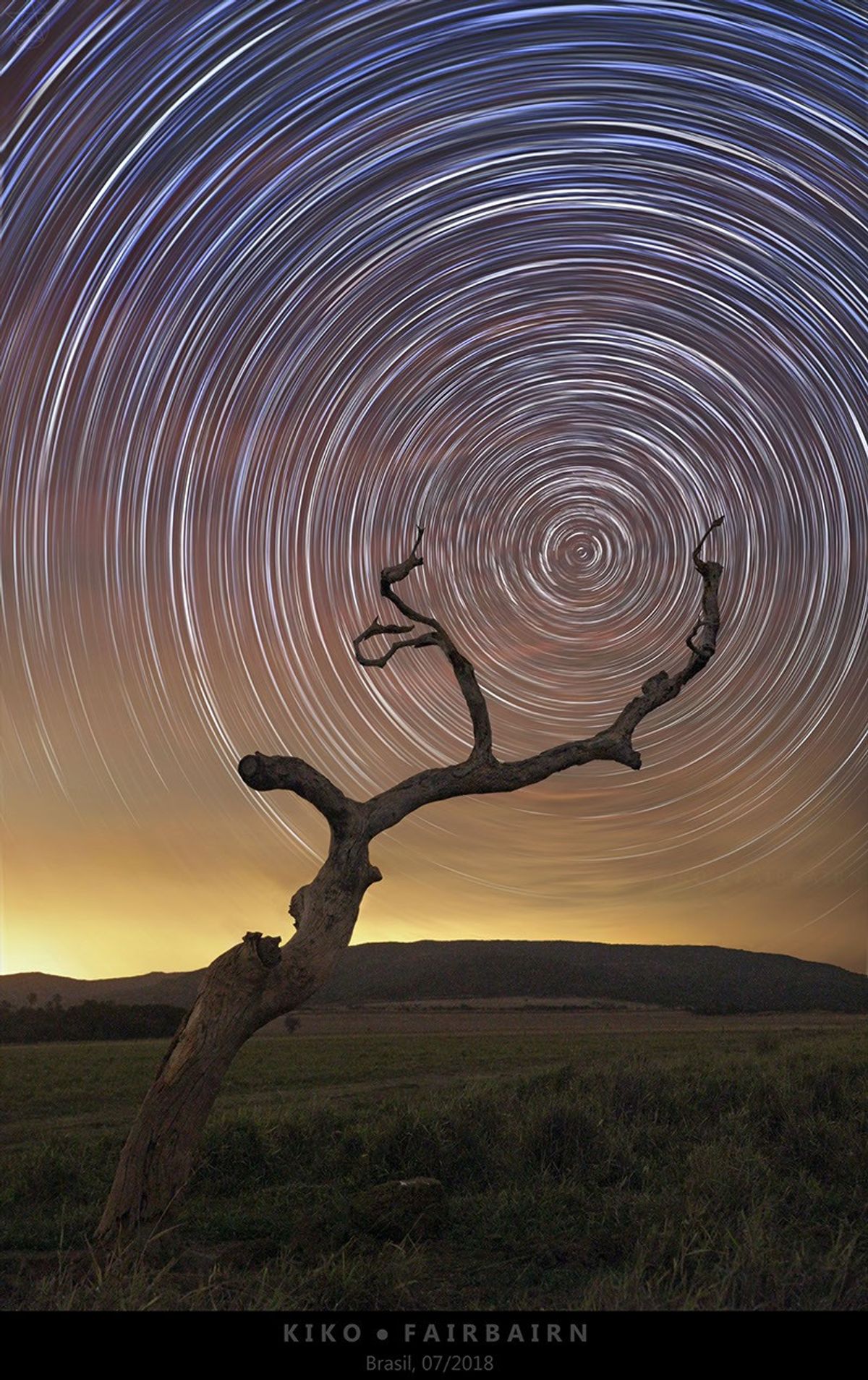
Selected image source ↗ APOD published April 16, 2026. Credit: Kiko Fairbairn. A publication-date match, not a photo taken on your date. Independent of NASA.
Read the original APOD for the astronomer’s explanation and full image credits. Its text is preserved in the archive as published.
If you live in the northern hemisphere, you may have learned how to locate the North Star, Polaris, in the night sky. It can be used to find north, and it approximately marks the northern celestial pole. If you live in the southern hemisphere, there is no bright star marking the southern celestial pole, but the Southern Cross can be used to find south. The featured image was taken in Padre Bernardo (GO), Brazil. It shows the apparent motion of the stars around the apparently empty southern celestial pole over 2 hours, on August 20, 2018. Each star takes about 24 hours to make a complete turn around the pole in the sky. Padre Bernardo is located in the Cerrado region, a tropical savanna that occupies most of central Brazil and supports rich biodiversity. The barren branch that apparently supports this sky wheel of rotating stars is a common sight there in the dry season during the southern winter.
Image credit: Kiko Fairbairn
Updated · APOD entries through