April 11, 2026
April 11, 2026
A little universe, just for you
Free PNG · 1080 × 1350 · No account needed
Image rights and credit requirements apply when sharing or reusing imagery.
Your celebration date stays the same. Each image keeps its actual publication date.
Selected image source ↗ APOD published April 11, 2026. Full image credits are on the original APOD entry below. A publication-date match, not a photo taken on your date. Independent of NASA.
Read the original APOD for the astronomer’s explanation and full image credits. Its text is preserved in the archive as published.
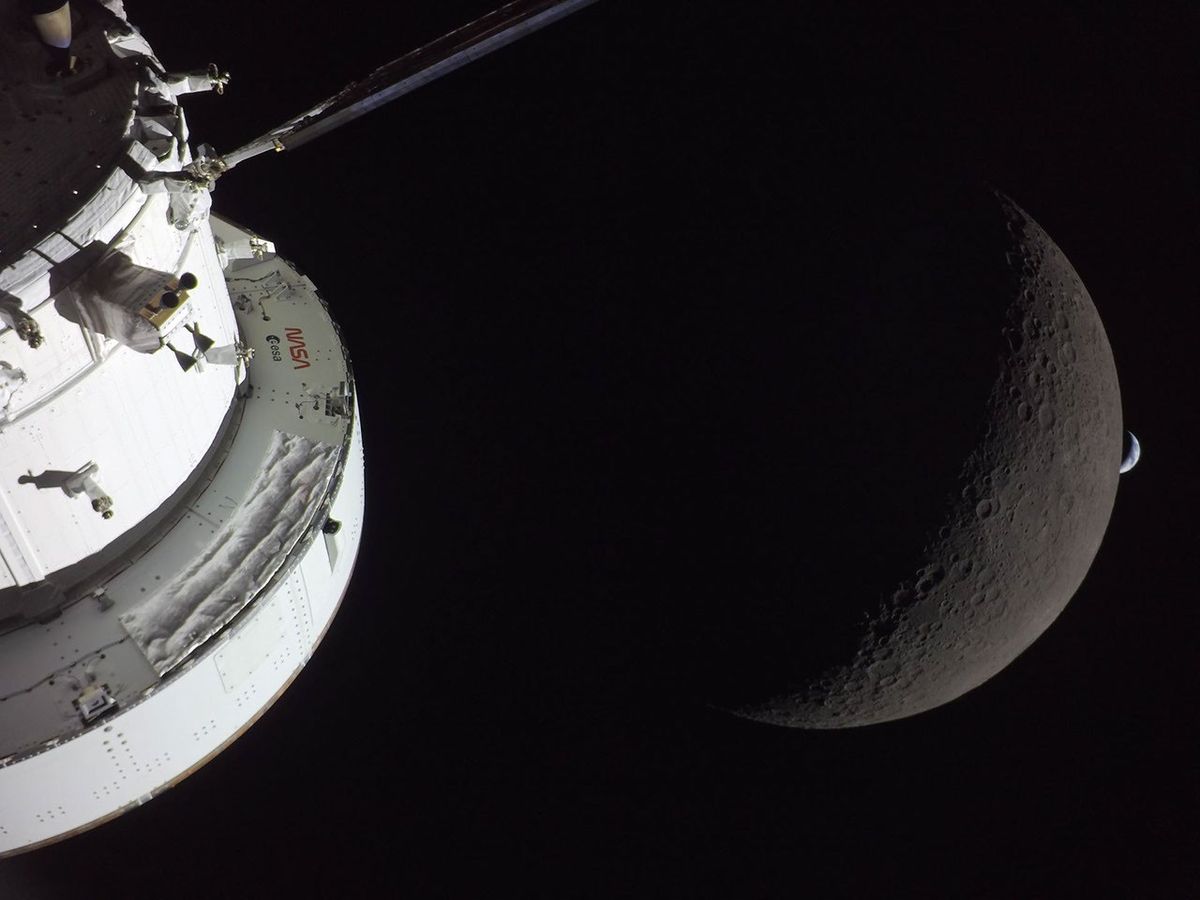
On flight day 6 (April 6) the Artemis II mission achieved a historic lunar flyby. Rounding the lunar far side, the deep space maneuver marked humanity's first venture to the Moon since Apollo 17 in 1972. The Orion spacecraft Integrity reached a maximum distance of nearly 407,000 kilometers, and the Artemis II crew, Reid Wiseman, Victor Glover, and Christina Koch, and Jeremy Hansen, set the record for the farthest distance from Earth traveled by any human since the Apollo 13 crew in 1970. From behind the Moon on flight day 6, a solar array wing camera recorded this space age selfie, framing the spacecraft and lunar far side. Planet Earth, home to the Artemis II crew, is the small, bright crescent beyond the lunar limb. The crew safely returned home on Artemis II mission flight day 10. Artemis II: Splashdown
Updated · APOD entries through